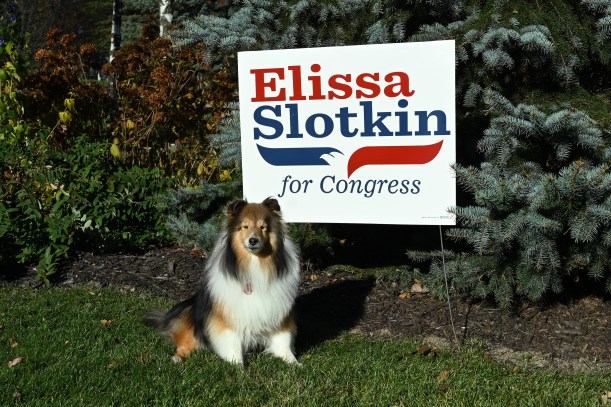
Katie here. Hey! Bet you’ve been wondering what I’ve been doing lately – right? What? You’ve been busy with all the craziness going around, the virus, the election, the weather?
I’m not on your radar?

At a new park!
Huh.
I think mama’s been slipping. I hired her to be my agent, my marketing advisor, and my general manager, but maybe that’s too much for her, what with her being elderly and all.
I might have to reevaluate her contribution to my franchise.

We had a pretty beautiful day to enjoy the park.
I guess I’ll have to tell you about an adventure I had last weekend myself. I can’t believe it’s already a week ago and mama hasn’t put it up on my her blog.
You might remember that last year I got to meet aother sheltie-girl, Abby. We met her and her mom down in Ann Arbor and walked in the Arboretum. We said we’d get together again, but you know how time flies, and here it is a year later and we still hadn’t gotten back together.
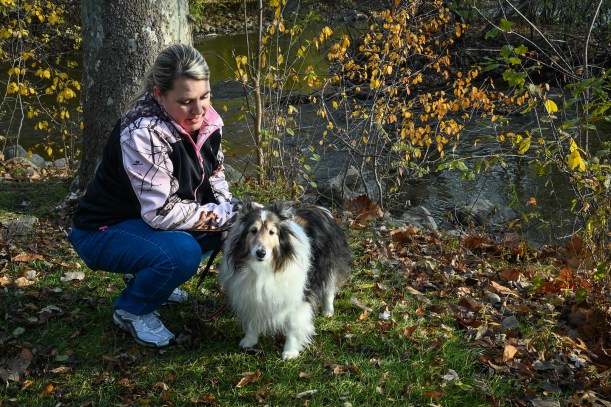
This is Abby and her mom Shawn just last weekend.
So I told mom she better get to getting and arrange another walk date with my friend. And you know what? She listened to me and the next thing I know I’m in the car and the ride is much too long for us to be going to my usual parks.

Isn’t she beautiful? She’s 13.
I got kinda nervous, but figured I’d trust mama this time, and I was happy I did. Cause we got out of the car at a beautiful little park in Ann Arbor, and there was Abby and her mom!
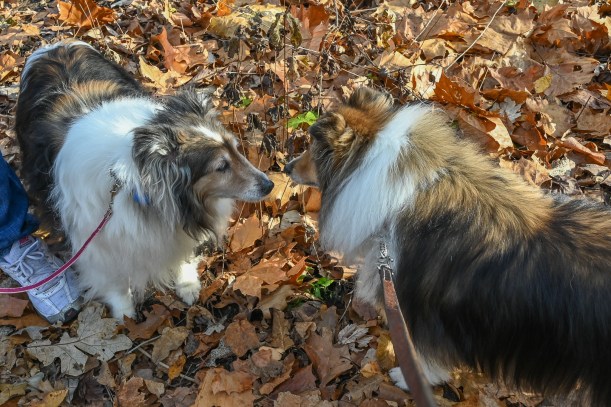
It was nice to see Abby again!
Both of us are a year older now and we don’t go on real long walks any more, but this little park was perfect, with lots of places for the moms to sit and talk while we rested.

Abby liked to sit between her mom’s feet.
Well, sometimes we rested, sometimes we asked how long the moms were going to sit around.

I liked to spend our walk breaks checking for treats.
Abby and I were OK with posing for the moms as long as we were maintaining our social distancing. It’s really not that hard, neither one of us understands why people are having such a hard time with this concept.

Abby will pose for NO TREATS! I’m going to have to explain my ‘one shot, one treat’ rule to her.
Anyway, it was really good to see Abby and her mom. We decided we might try to get together again before the weather gets too bad. But knowing mama, that will probably be next spring!

I think our beauty enhanced this park. Dont you?
Abby. She’s so beautiful, she still reminds me of a regal queen. Queen Abby and Princess Katie. We were quite a beautiful sight, as we were told by numerous people out there in the park.

Hanging out together, but not too close together.
People are pretty good at spotting royalty, even when we leave our tiaras at home.

Definitely royality.
Signing off for now,
Park Princess Katie

It’s good to have a girlfriend when you want to go on a walk.