I was out there to meet the Queen. I’d been trying to get an audience with her for several weeks. But she’s a Royal and follows her own rules. I’m used to that.
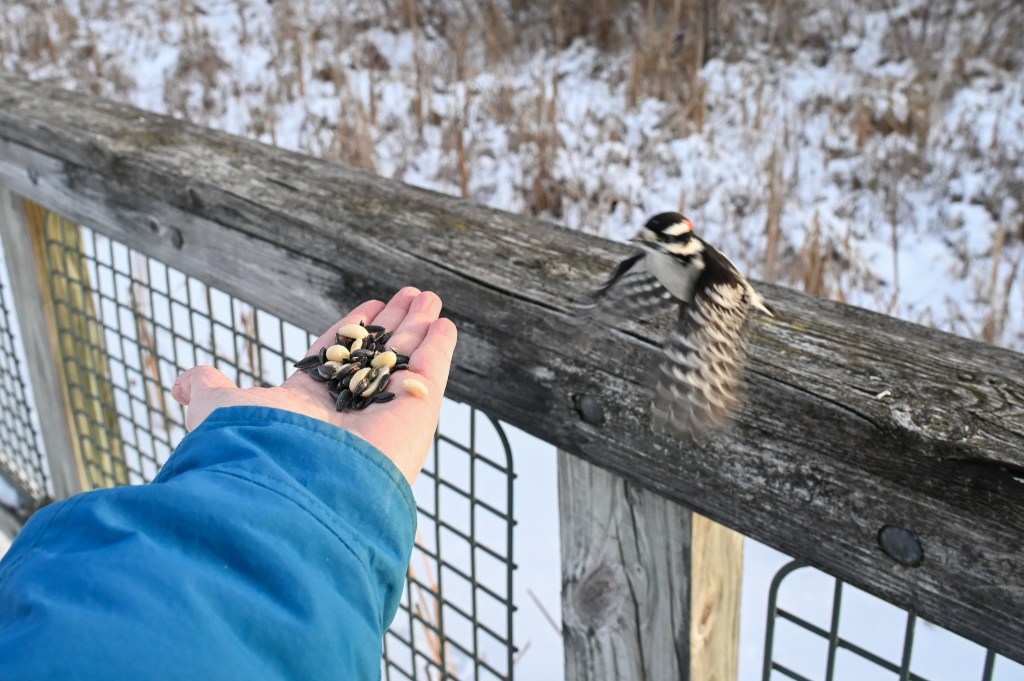
Anybody out there? Hey Mr. Downy, are you hungry?
You see, almost every day I’d see, on Facebook, a photographer who calls herself the “Hand of Snacks” feeding a female cardinal along the boardwalk at my favorite park.
Well, at least one bird wants a snack!
Lots of birds come down to any number of hands filled with snacks at this park, but cardinals are famously shy. Quite stand-offish. So to see this female sitting in a hand regularly intrigued me. And I drove the 30+ minutes every week or so, hoping to get to meet her Majesty for myself. Oh, I’d see her – sitting in the scrub along the boardwalk. I’d offer a treat. She’d watch me. But she never showed any interest in getting to know me better. Week after week I’d leave disappointed.
They almost always go for the peanuts first.
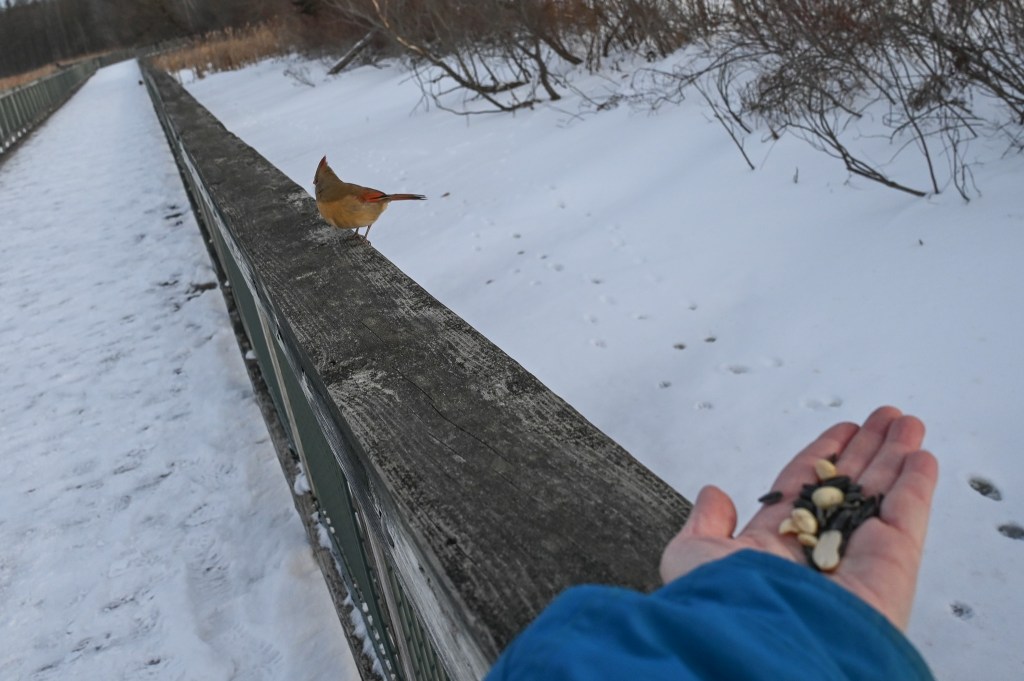
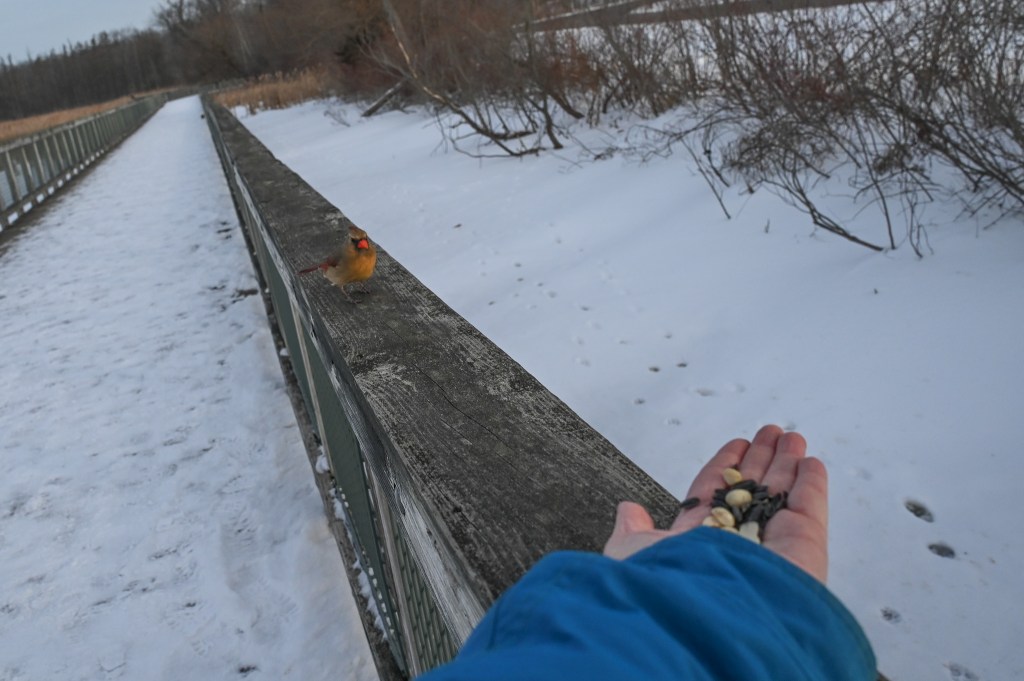
This Wednesday, there she was, sitting among the twigs of a dogwood bush with her partner, the bright red Mr. Cardinal. And that morning she seemed interested in me. She moved out to the end of the branch and eyed me up and down. I stood still, gifts offered. She flew to the railing, quite a far bit away from me and eyed me some more.
She’s not too sure about this.
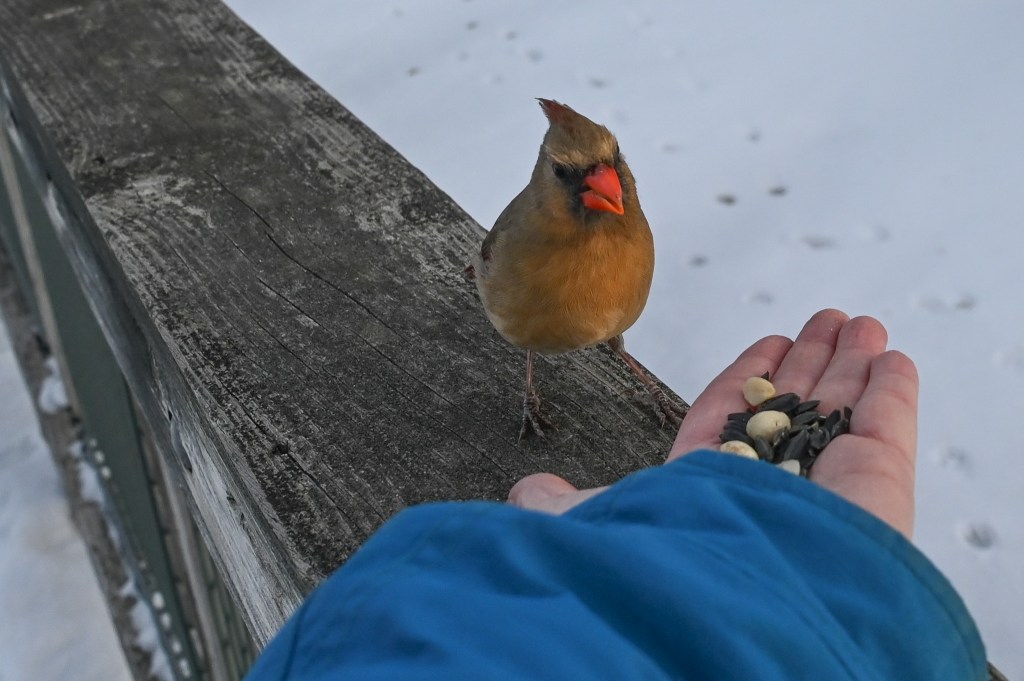
Clearly I was not her Hand of Snacks. I was an imposter. But she was hungry. But I was an imposter. Could she trust me? Would she trust me? She hopped along the railing to get a closer look. She looked up at me and then down at the snacks in my hand. I stood still, barely breathing.
Come on sweetie, it will be OK.
And then she reached out, her feet still firmly planted on the railing, she wasn’t going to actually stand on my hand, and grabbed an oiler seed, moving rapidly away from me to eat it. I stood still.
You have options, pick your favorite!
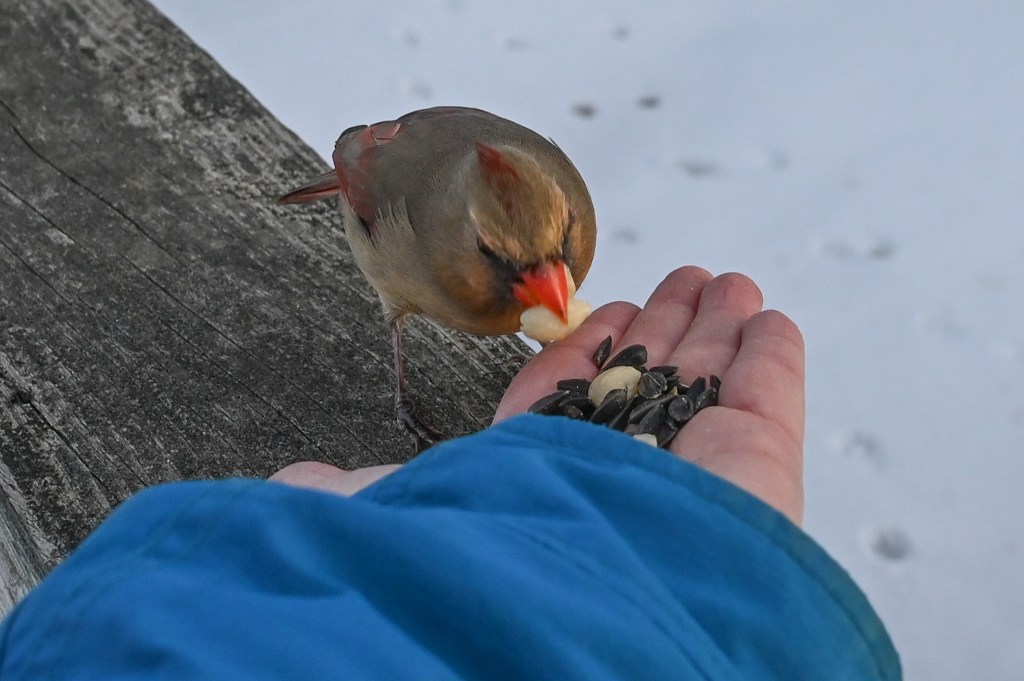
She hopped over again and helped herself to another treat, not moving so far away this time…and then she grabbed a peanut and with a slight nod to me, she flew back into the bushes to share it with her partner.
You’re such a good Queen, taking your partner the best peanut.
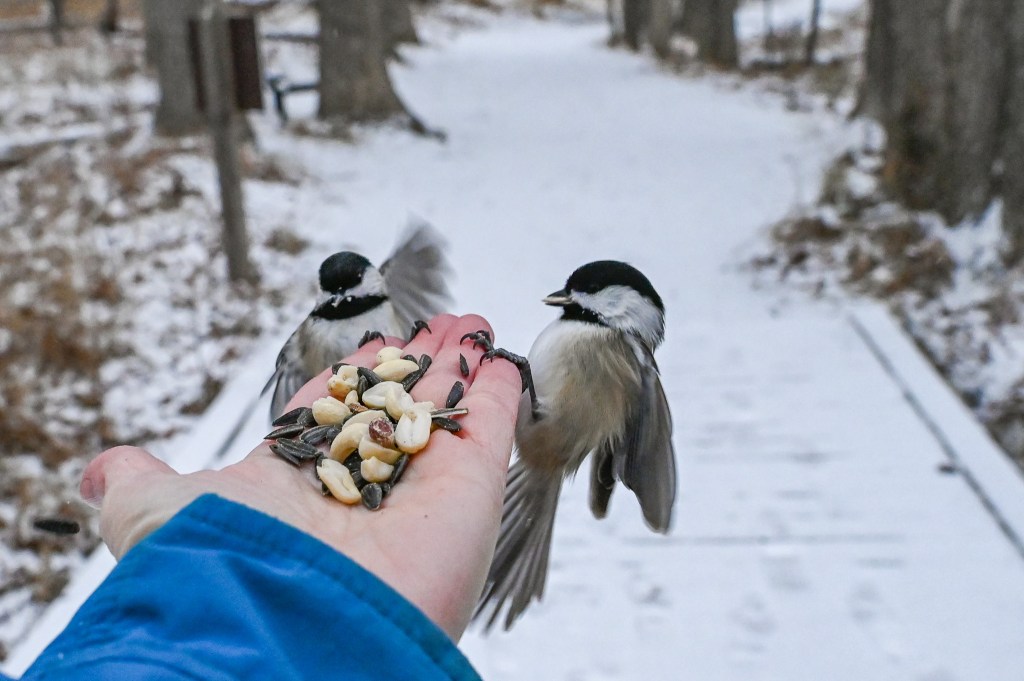
And the politely waiting chickadee hopped up onto my hand to see what she had left behind.
She’s off to share. Mr. Chickadee is waiting in line.
Now I can say I’ve met the Queen. And it was everything I knew it would be.
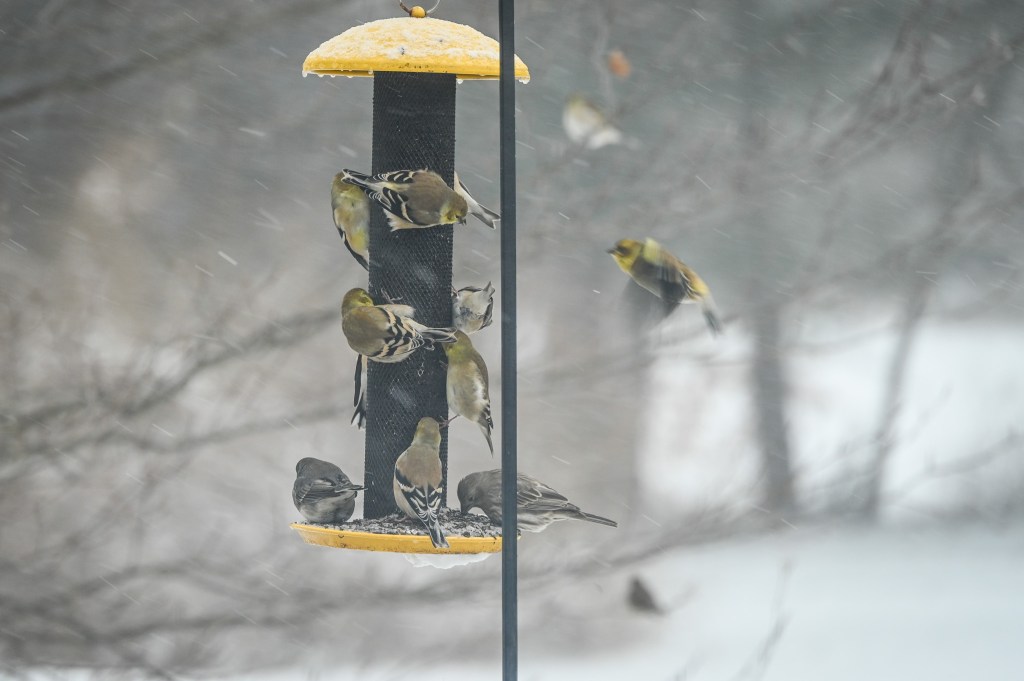
I’m sitting here watching my birds at our feeders. We have a lot of feeders, starting out with one we thought they could all share…then realizing that some birds aren’t sharers at heart.
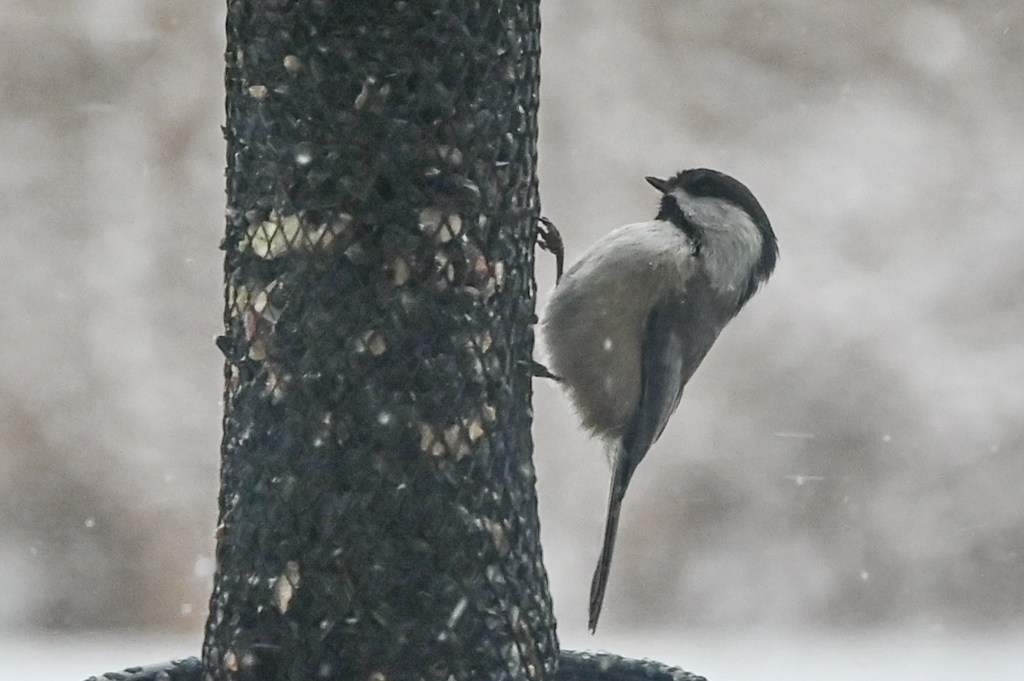
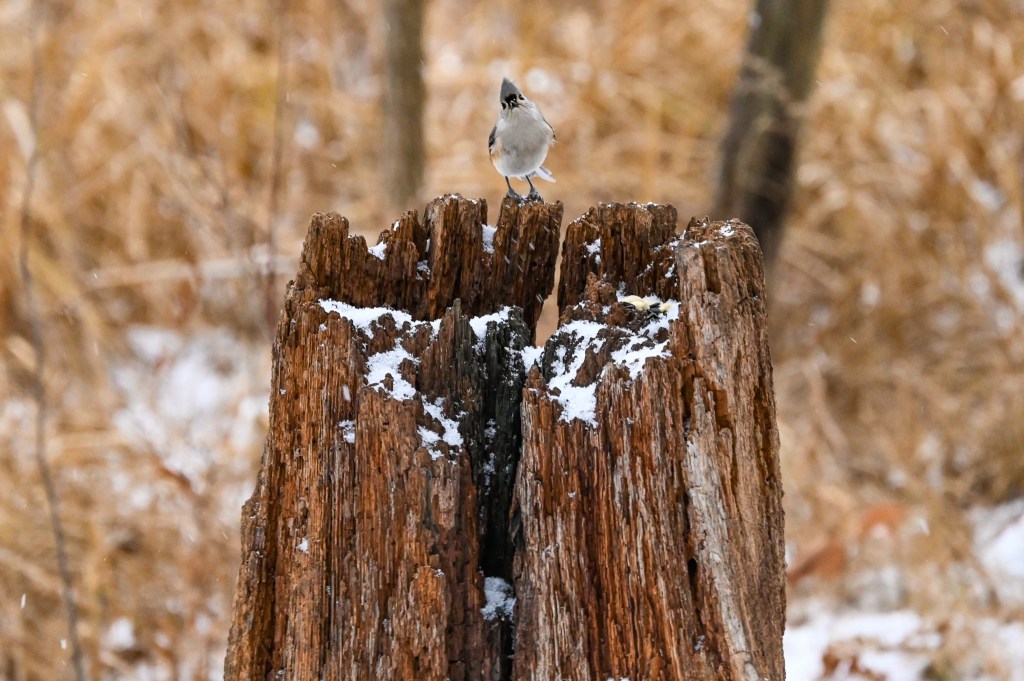
Waiting his turn.
Now I fill 4 feeders every morning, and hope I can go the rest of the day without heading out to fill them again. But with the weather this week, all the wind and cold and snow, the birds were ravenous and I ended up out there more than once on each cold, nasty day.
Make room for one more!
Anyway, the year is winding down and I feel like I should be reflecting on 2022. But, in our family, it was a difficult year and one that might best be let go without any formality.
Grab a seed and go, little buddy, before that big woodpecker comes back!
Best, maybe, to anticipate next year. I am very hopeful about 2023.
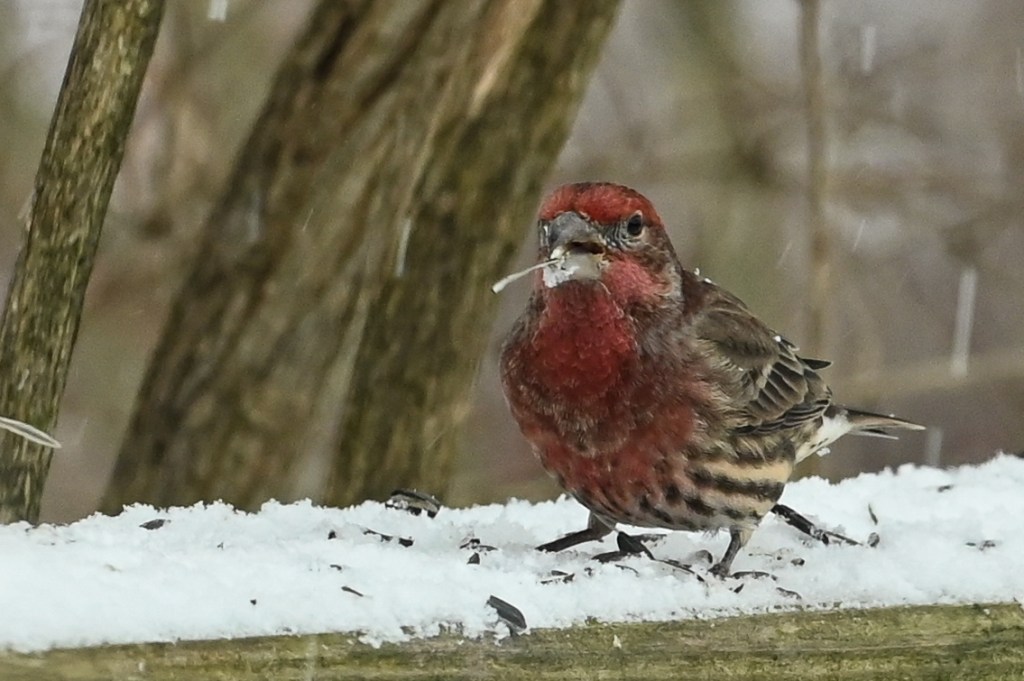
It’s hard to wait your turn when you’ve got snow melting on your beak.
I’m hoping there are camping adventures waiting in the woods, perhaps even near a dark sky park.
A fluffy downy woodpecker checks out the inventory.
I am hopeful for clear warm summer nights when the moon is new, and wild stormy cloud filled skies during afternoon barn searches.
A hairy woodpecker wants to know who ate all the peanuts.
I’m hopeful for lush gardens of vibrant flowers filled with fat buzzing bees and the whisper of hummingbird wings.
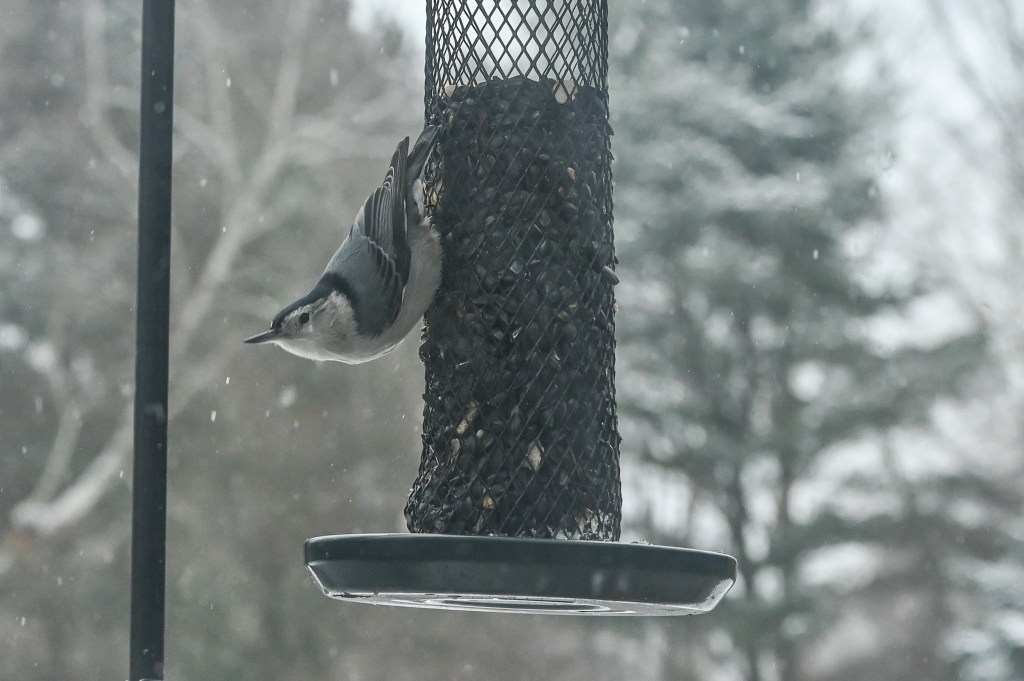
A nuthatch keeps watch while grabbing a snack.
I’m hopeful for red ripe tomatoes warmed by the afternoon sun, and bluebirds nesting in their boxes way out in the yard.
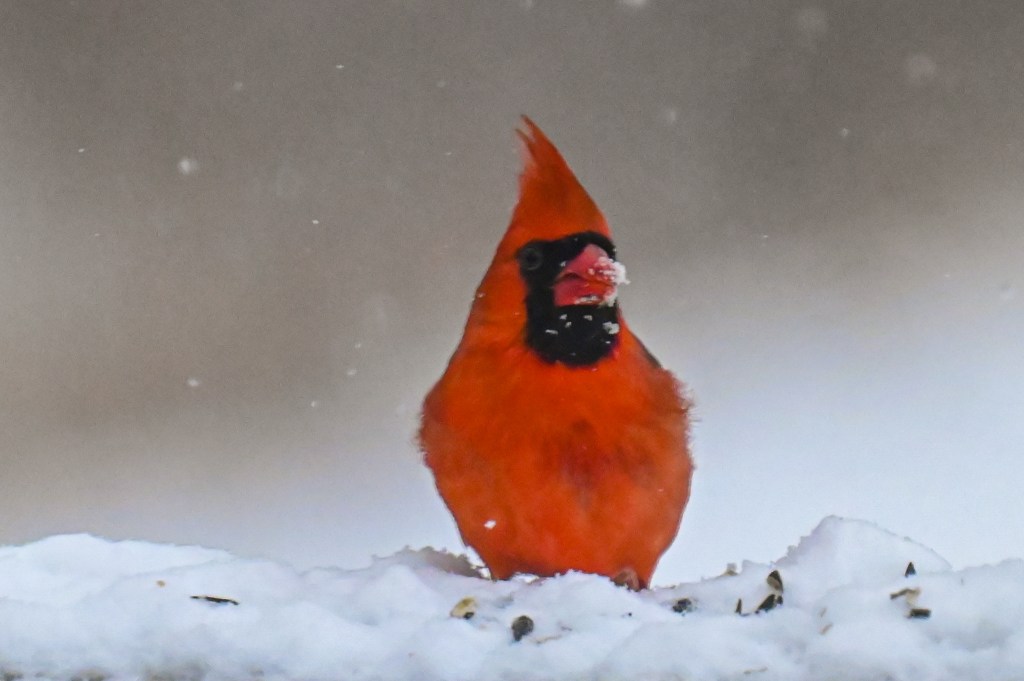
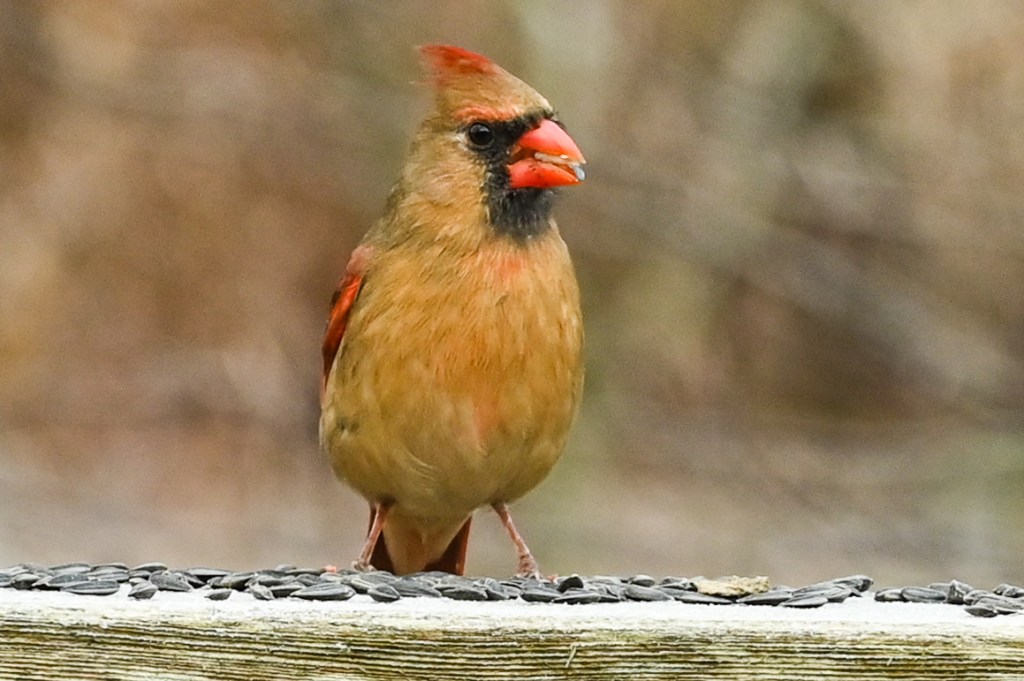
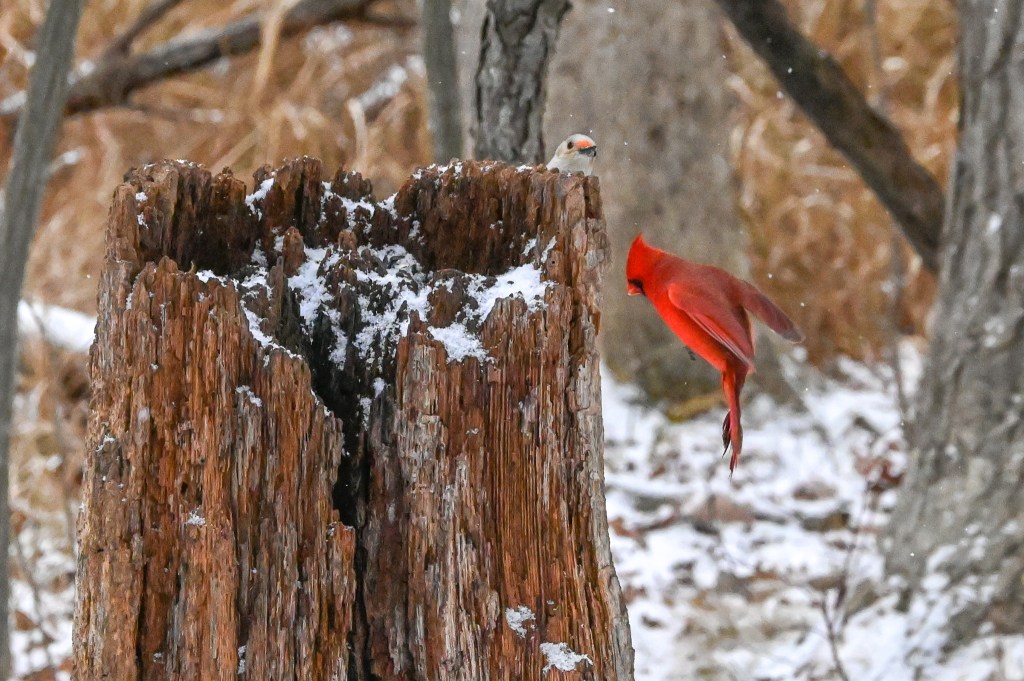
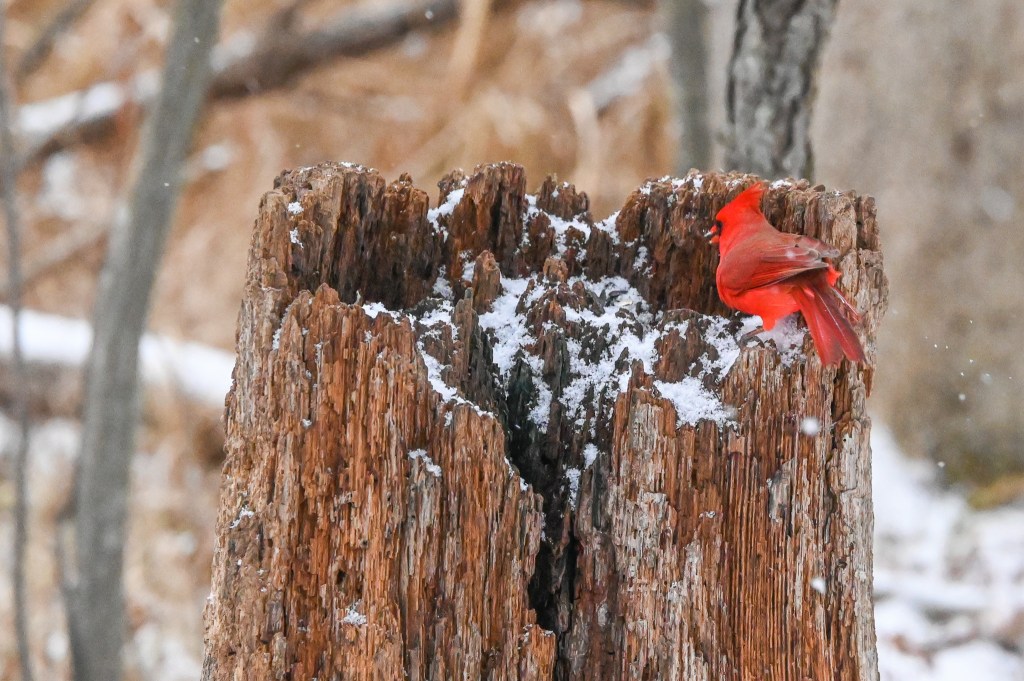
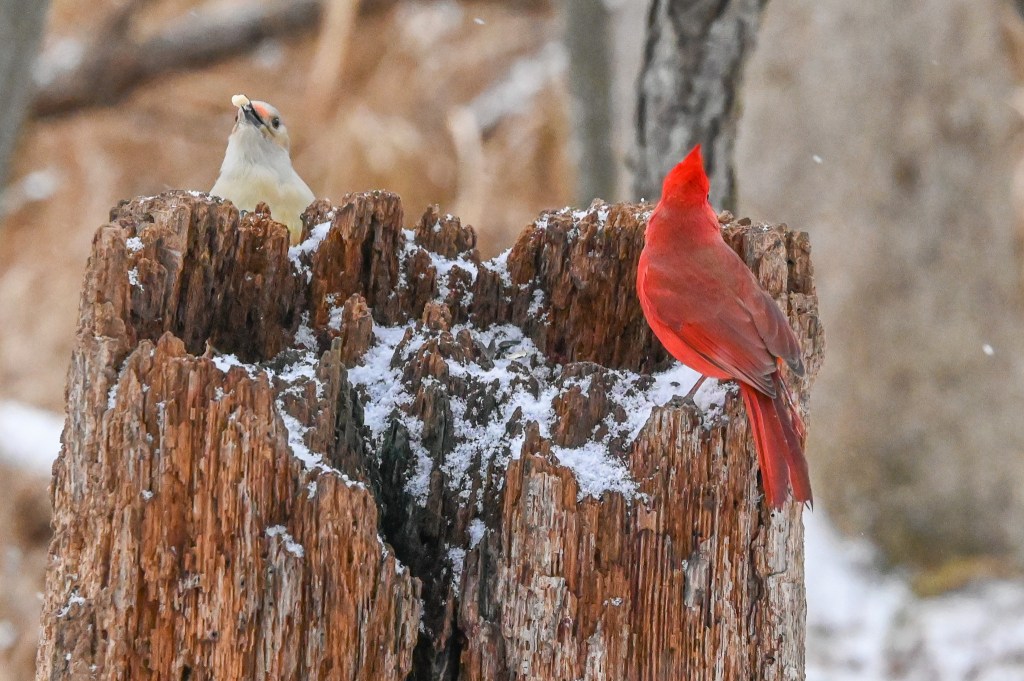
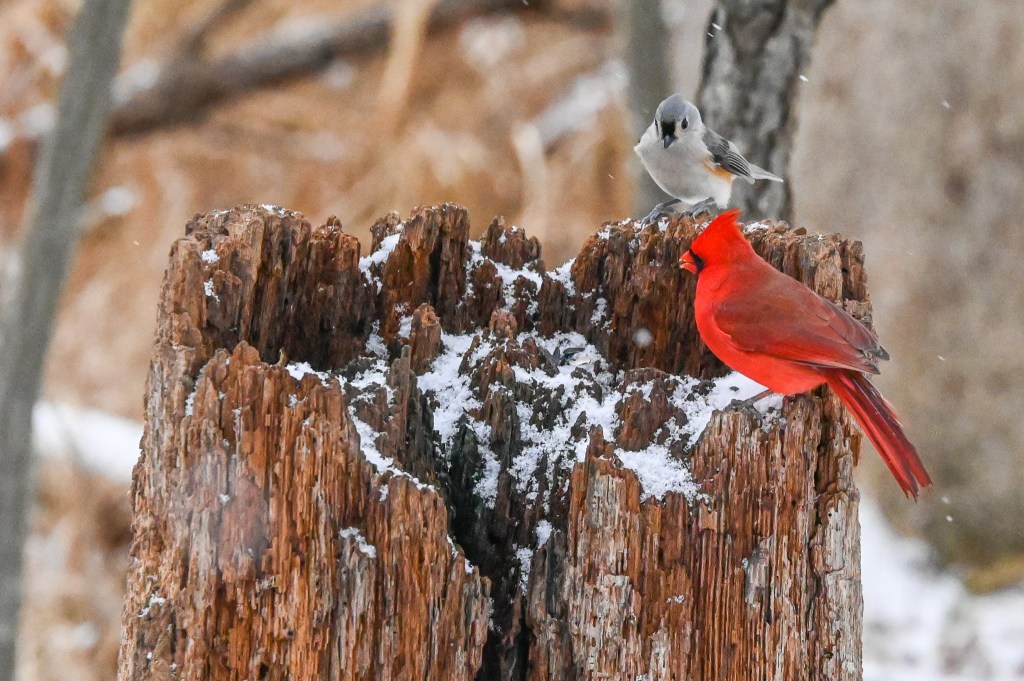
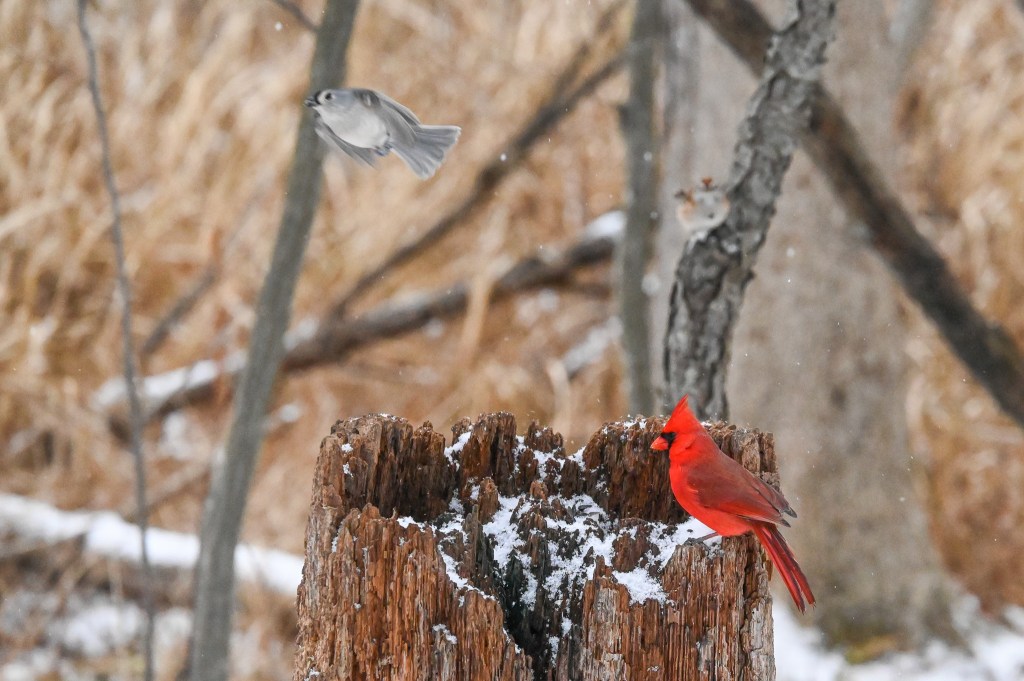
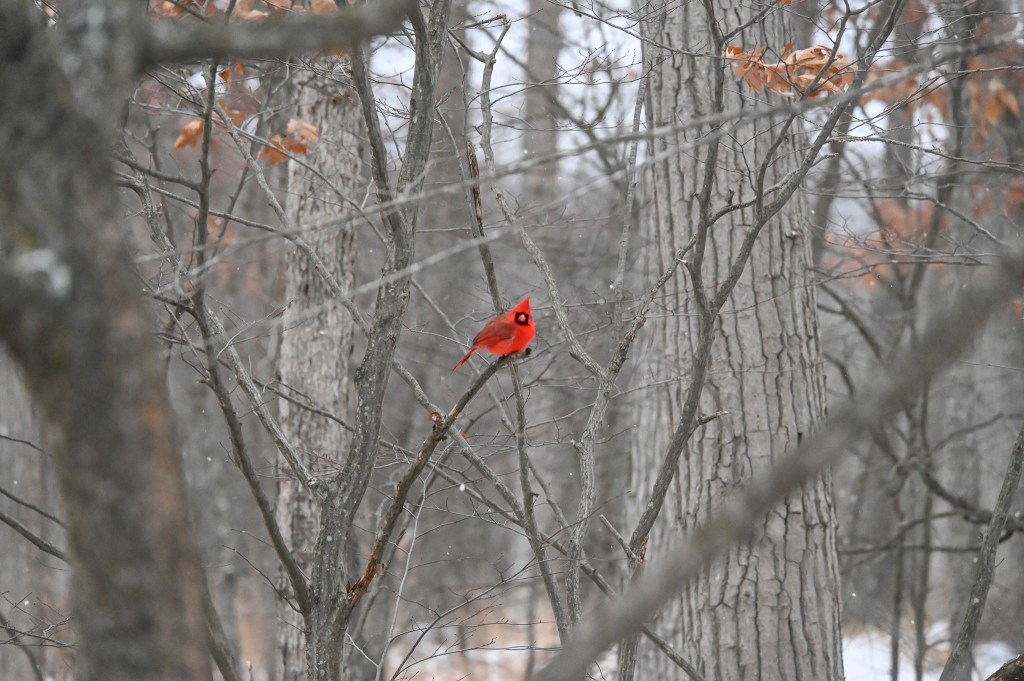
Mr. Cardinal enjoys a peaceful lunch.
I’m hopeful for a long bike ride or two, and more than a couple kayak trips down a river or across a lake.
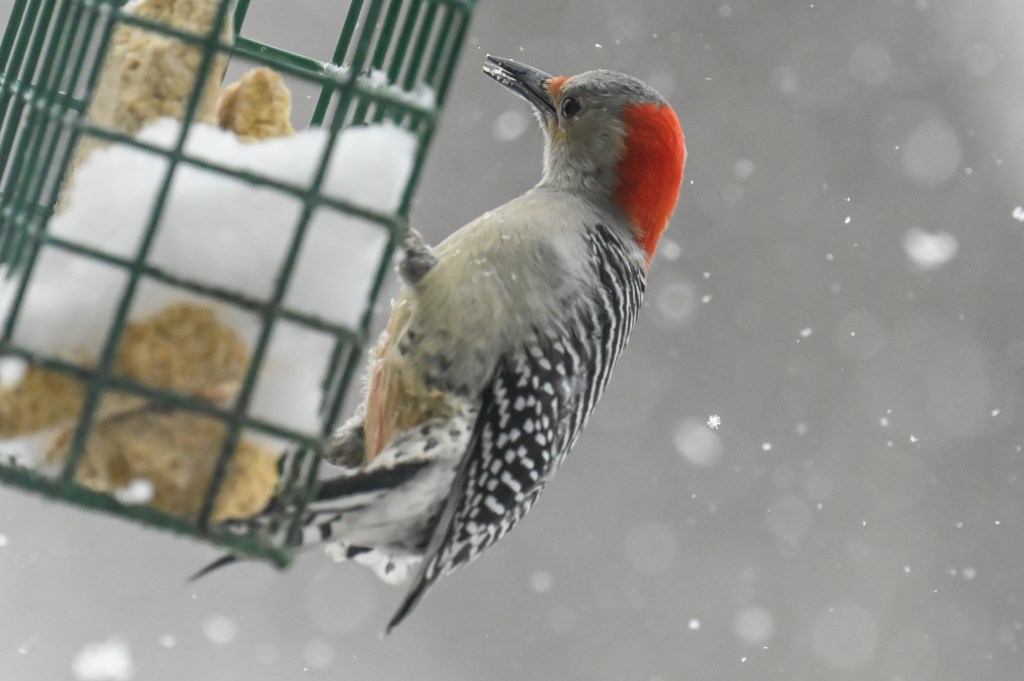
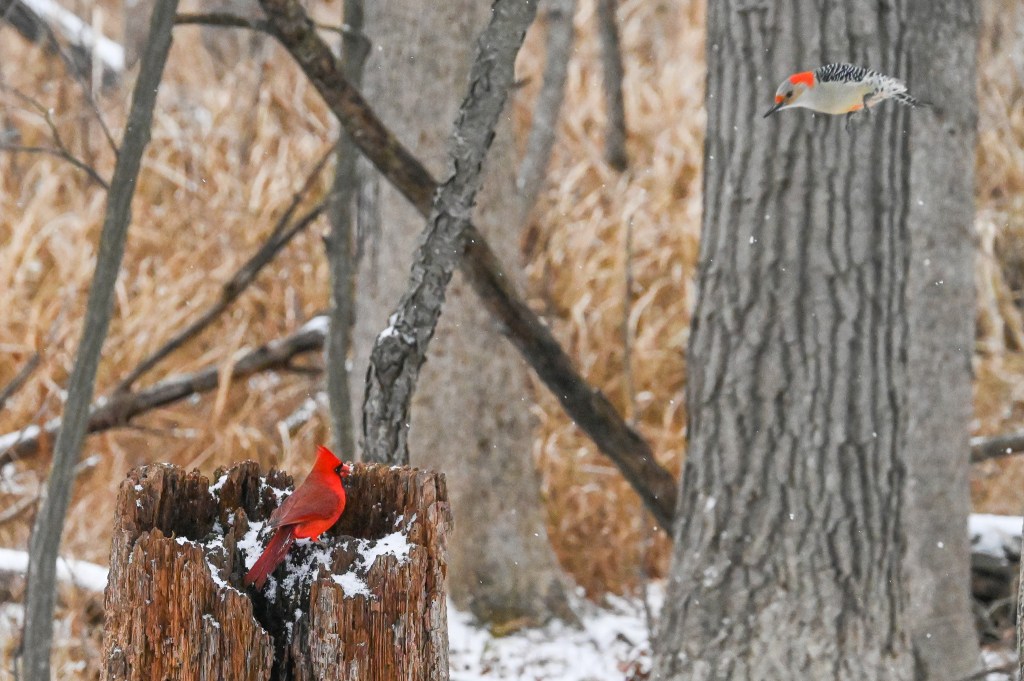
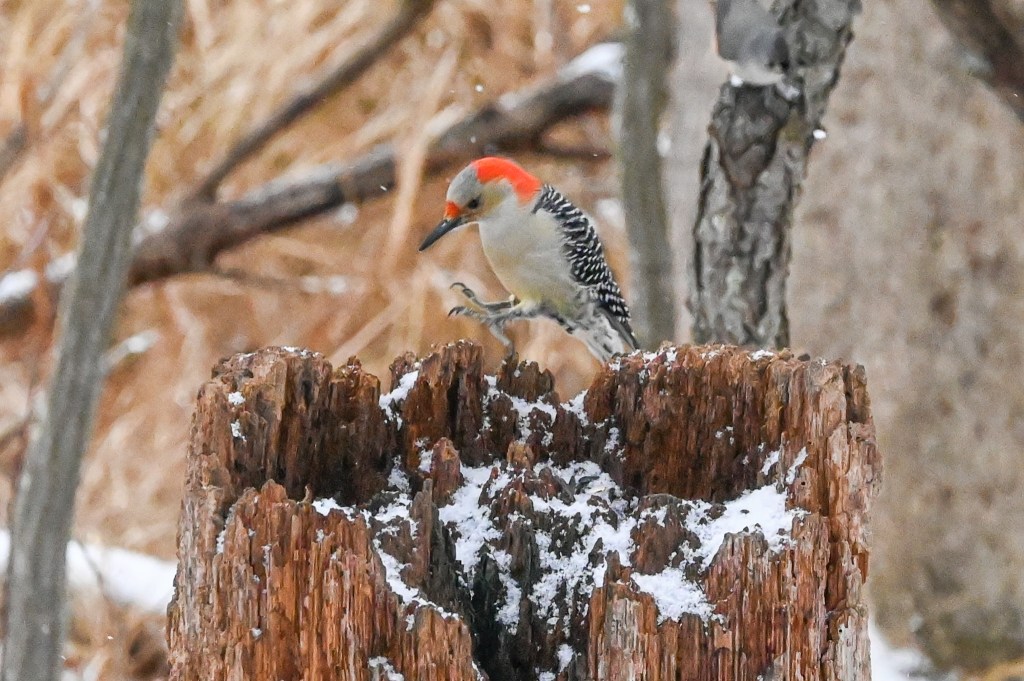
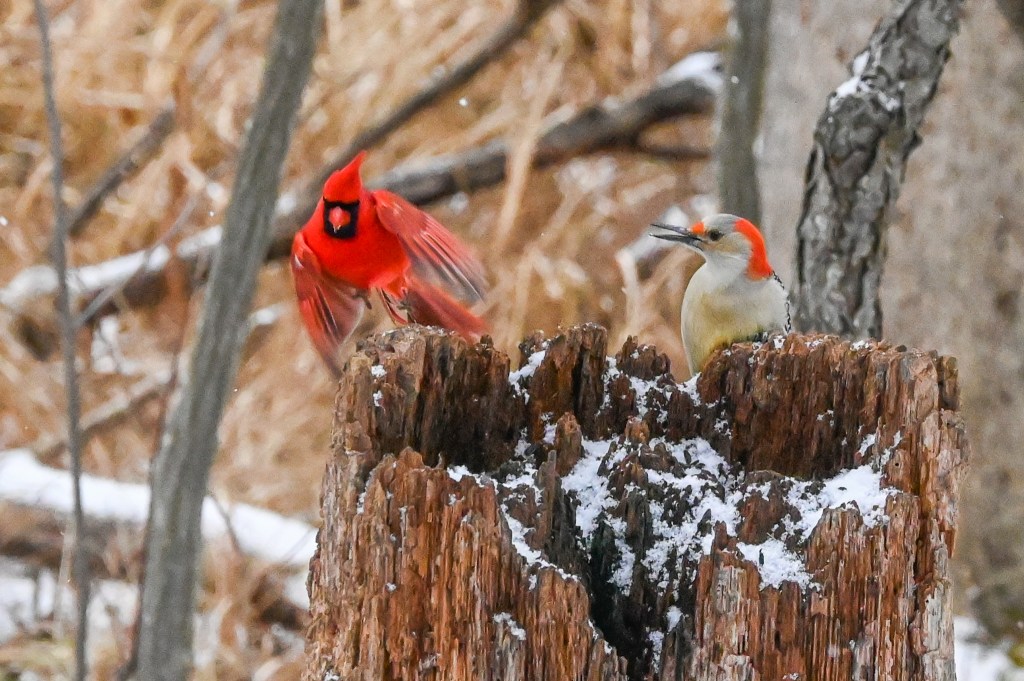
Mrs. Redbelly asks who failed to clean the snow off the suet?
I’m hopeful I’ll see Alabama again after too long away, that I’ll get to float again in the warm southern waters talking with neighbors and family until the sun slides down in a glorious sunset.
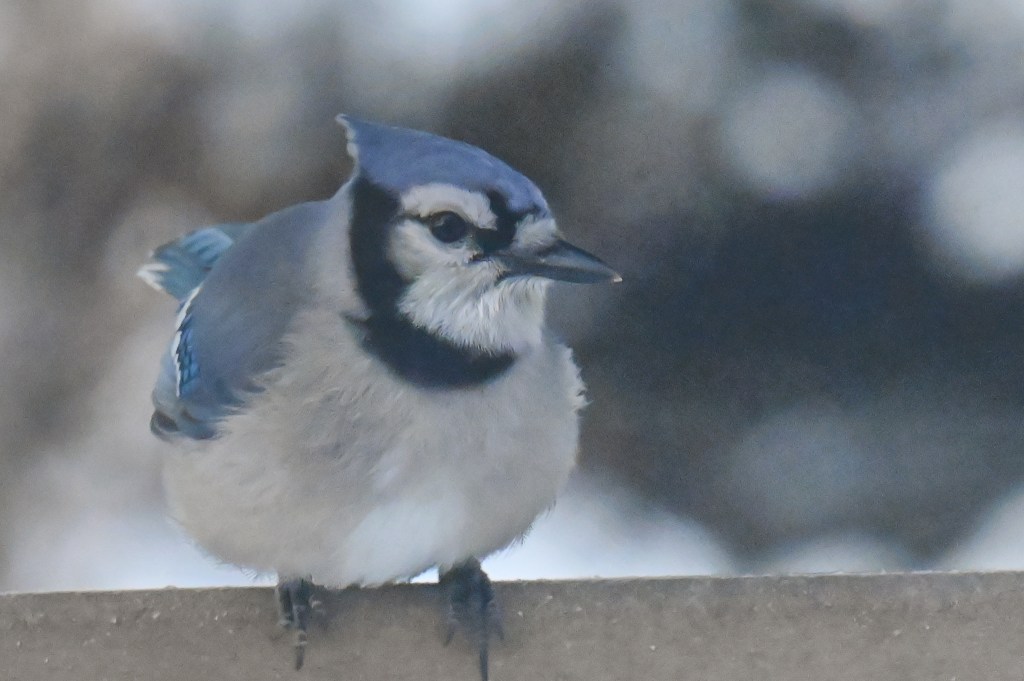
The bluejay is not known for waiting patiently.
And I’m hopeful I’ll get to see my Lake Michigan in all it’s moods a few times too, maybe even Lake Superior if I’m extra lucky.
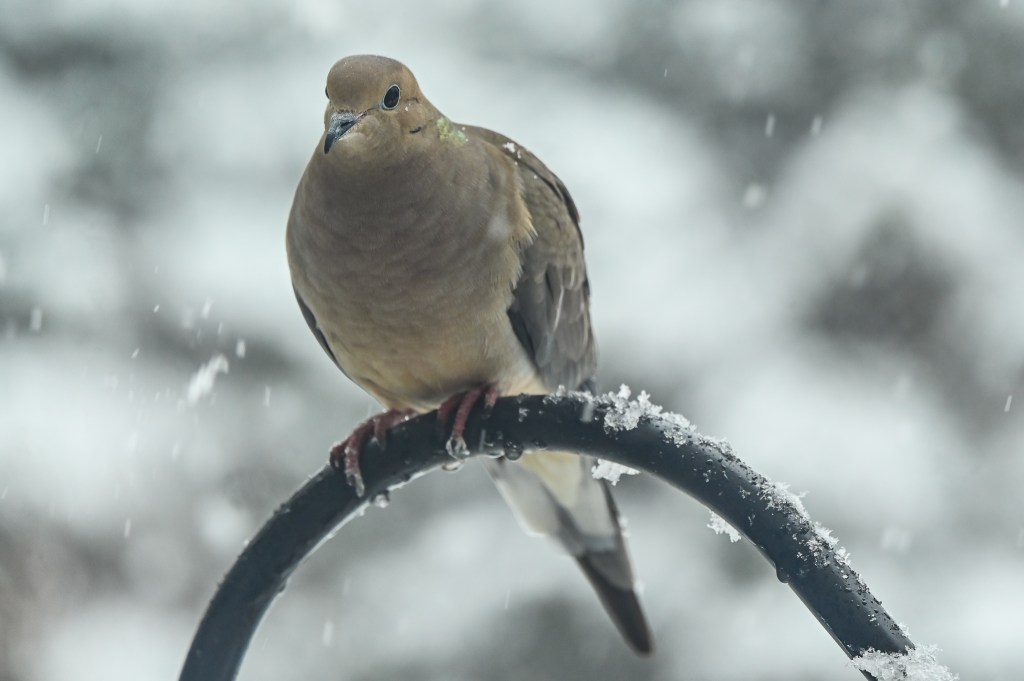
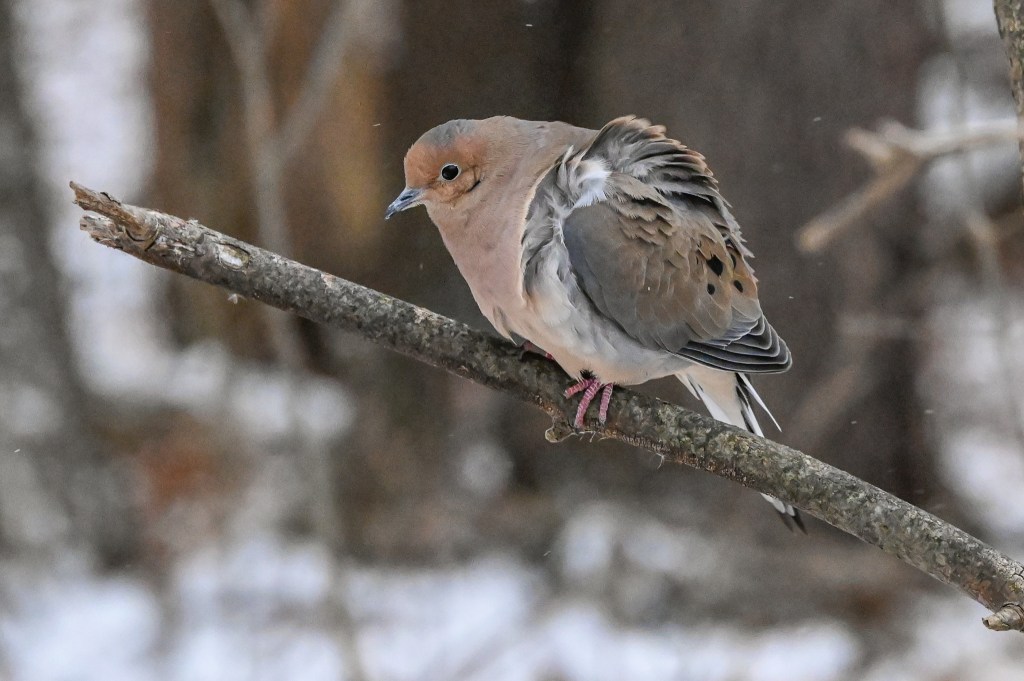
The mourning dove is almost always the last bird in to eat.
I hope I’ll be able to roam further from home too, perhaps even to dark skies in other states. I’ve heard Michigan does not hold a monopoly on the stars.
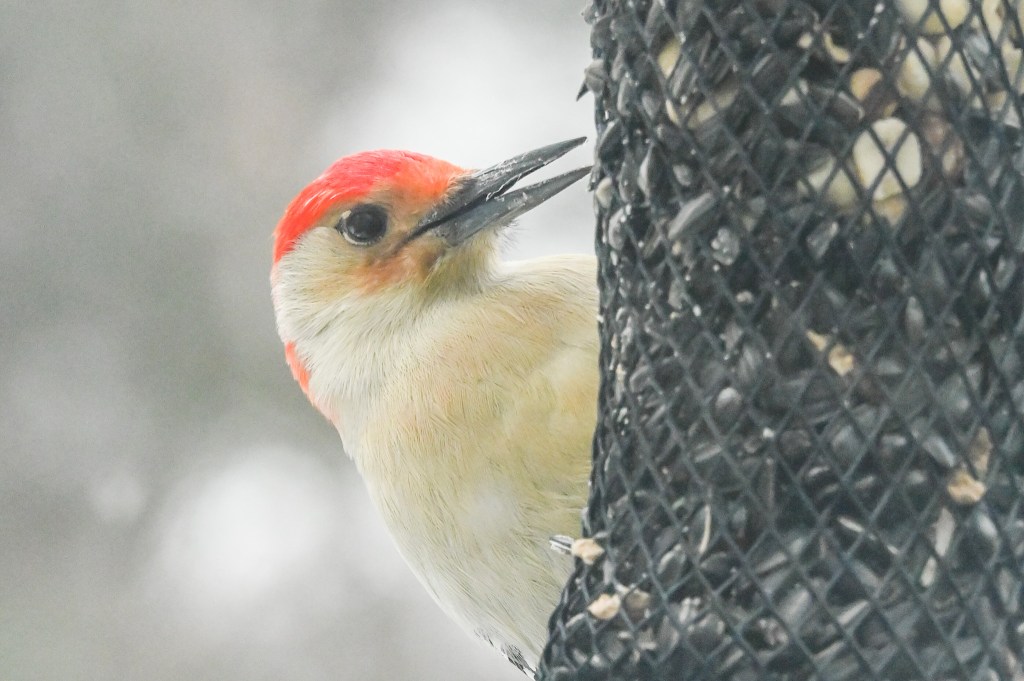
Mr. Redbelly decides what his next snack should be.
And I’m hoping I’ll get to share it all with you. And maybe, just maybe if we’re exceptionally lucky, I’ll be able to share it with a new puppy.
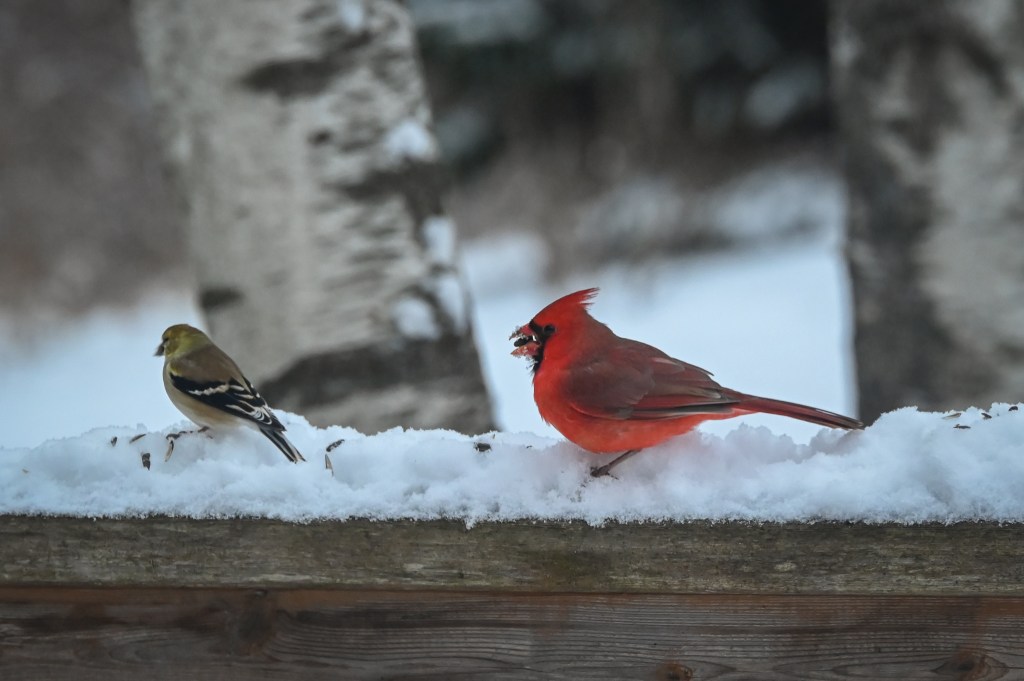
A bit of peaceful coexistence.
But that’s a story that has to wait to be told.
Eating as fast as he can.
Meanwhile I’ll sit in my chair near the window and watch my birds as they devour their lunch and dream about another, happier, year.
Mrs. Cardinal eats her fill.
May you all have dreams for 2023, and may the best of those come true.
I’d like to thank all of you who spend time reading my blog, looking at the photos and so often commenting. 2022 has been a challenging year for some of us, and it’s nice to put thoughts out into the blogosphere, as a way of therapy or just to record events.
Thank you for understanding that sometimes I write for all of us, and sometimes I write for me alone. Either way I feel your support and I appreciate it so much.
Have a peaceful or chaotic holiday, whichever you prefer and then let’s all work on making the new year extra special. I’ll be around soon, you can count on more birds, more snow, more parks, more night skies, more walks, more musings, and more adventures. I can hardly wait.
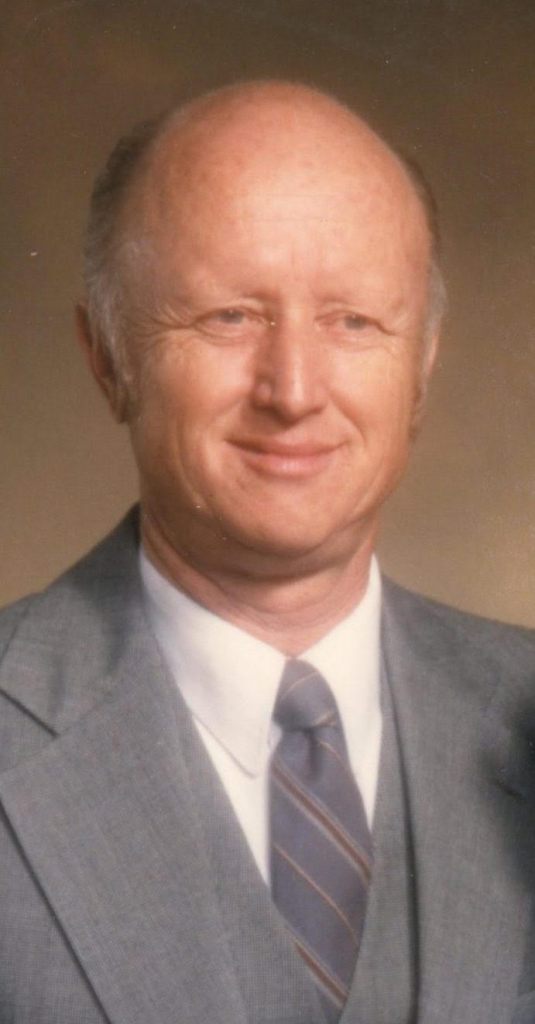
William H. Badger. Feb 4, 1929 – December 23, 2004.
Eighteen years without you is a long time. And no time.
You should have had more time.
Sometimes it feels like we’ve made no progress at all. And sometimes I know we’ve at least stopped some of the unsafe propositions, maybe even made a few inroads toward safety.
Still.
You should have had more time, and we can’t fix that for you or any of the thousands of families trying to move forward with their own grief. Their own new normal. I hate that term.
Eighteen years ago this morning. Last night, laying sleeplessly in bed, I imagined you getting up so very early in the dark morning, making sure the heat was turned down, the water turned off, and the doors locked, putting your suitcase into the trunk of your car and heading toward the airport.
You never got there. You never got to come home.
It’s not right, not for you or for us. Not for the 5,000 plus families that faced similar facts in 2021, or the as yet unnumbered thousands from 2022. And the hundreds of thousands of injured every single year.
We have to keep working, even though we’re all tired.
Anyway, I was reading Quaint Revival’s latest post about all the snow she’s getting over in Wisconsin, and she said it was beginning to look a lot like Christmas…which led her into thoughts about how those lyrics happened to be written and a request for someone to find out for her. Which, being a want-to-be librarian I felt compelled to do.
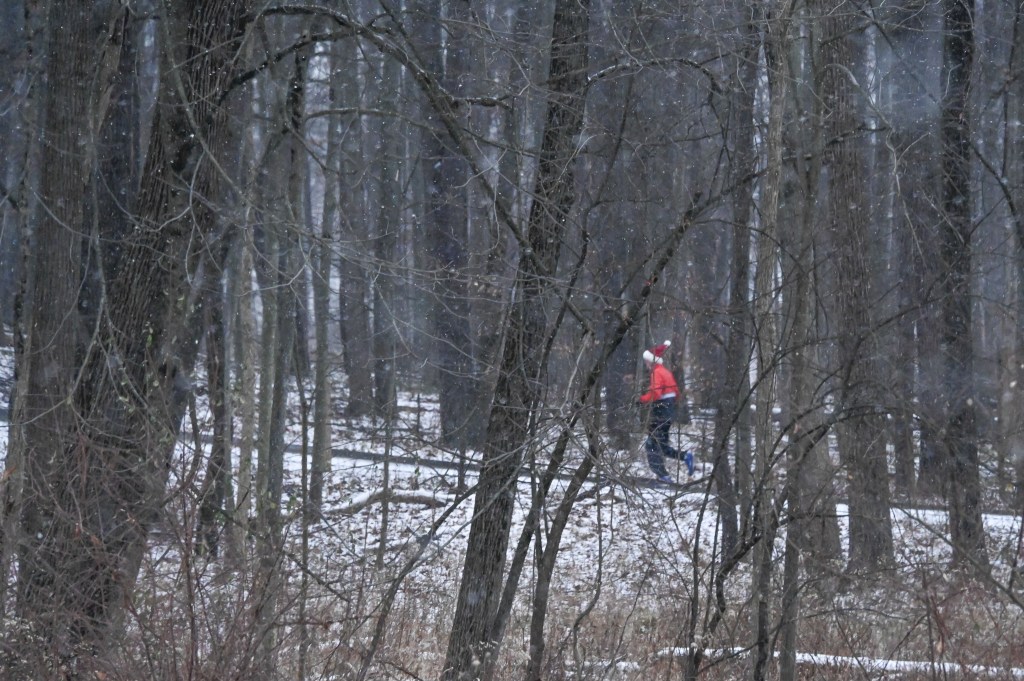
I think Santa is on some sort of exercise program.
She thought maybe the lyrics were written by Meredith Wilson in 1951 as he sat beside a pool, hopefully under warm skies. But Wikipedia says it probably was written in Yarmouth, and when I google that I can only find Yarmouth Maine, or Yarmouth British Columbia, neither of which sounds very warm, even in midsummer!
Looking for her Christmas gift. Or a peanut, whichever’s available.
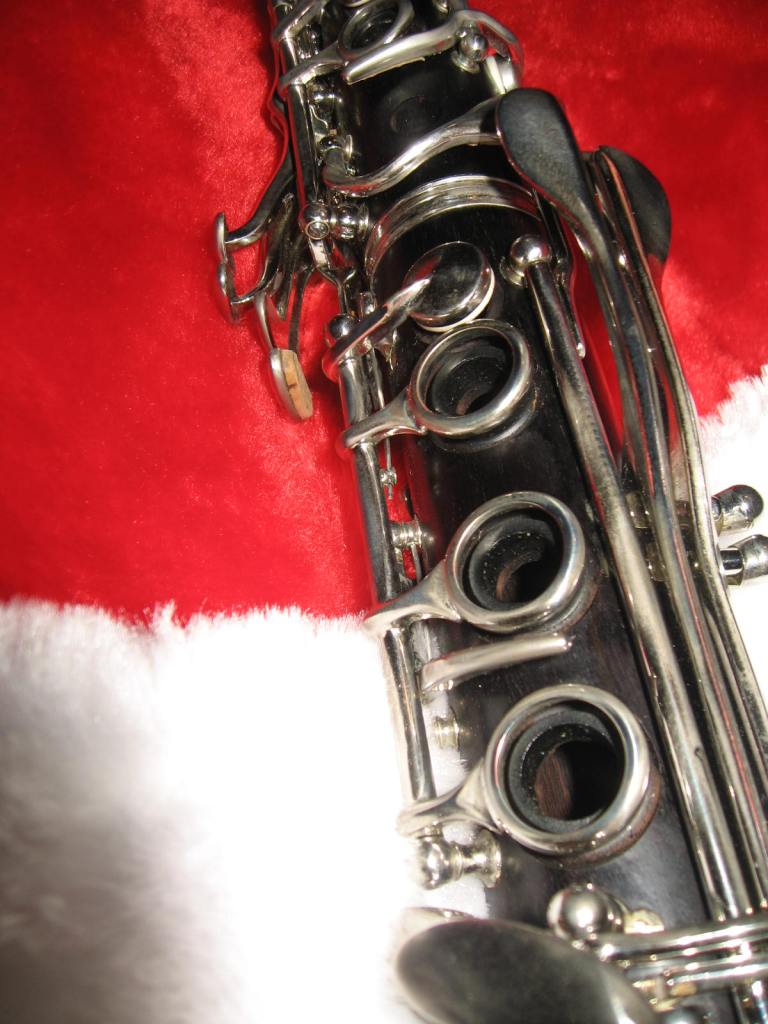
But looking for this information did remind me that we played this very piece of holiday music at our recent concert, so I went to listen to it again. Well, actually, I went and listened to it for the first time. Music sounds very different when you’re sitting in the middle of the band than it does when sitting in the audience, and I haven’t taken time to listen to our concert until now. (I recommend listening to this with a good set of earphones…it sounds a LOT better with earbuds than just using your laptop speakers.)
Holiday music always makes things better.
Last Sunday I had a couple friends come for lunch and painting. Well, truthfully, they brought most of the lunch (roasted tomato soup and grilled cheese sandwiches) and most of their own painting supplies too. After we ate the yummy lunch we settled in to paint Christmas cards. It was so much fun to experiment together. Plus it increased my stock of cards waiting to be mailed out to unsuspecting friends and family. I should do this on a larger scale next year!
Seems like birds infiltrate all aspects of my life.
We have a little bit of snow, enough to make things look pretty, but not enough to interfere with driving. Not that I’m driving much. One of the benefits of retirement is not having to go out unless I want to. When it’s cold and snowing I rarely want to. And though I miss my Katie-girl soooo much, I am kind of glad to roll over in bed and go back to sleep in the dark early hours of these winter mornings.
“I used to put up with an awful lot, mama.”
Speaking of not traveling, we’re staying home this Christmas. We have had invites to holiday gatherings, but this year we just can’t quite make ourselves wander out. Twenty Twenty-two has been a long, hard year for us. Instead of going out this year I’ll fix some of the family mealtime favorites, and we’ll snuggle up on the couch to enjoy the quiet.
I look forward to seeing these guys every year.
Though it might not be entirely quiet. We’re going to have a houseguest for awhile, a little 10 year old doggie will be staying with us while his mom is visiting family out of town. We’ve practiced him being here without his mom a couple of times and I think he’s going to settle in, but he sure does love his mom.
“Does this peanut make my head look flat?”
I saw a movie trailer this morning for something staring Tom Hanks. There was a year, a long time ago, when my husband and I watched several movies, unusual for us, realizing later that all of them were Tom Hanks movies. You know, Castaway, Green Mile, Saving Private Ryan. This movie is called something like A Man called Otis. While I was watching the trailer something felt familiar…and then I remembered one of my favorite books, A Man Called Ove, by Fredrik Backman, about an elderly man who’s quiet life is interrupted by a family that moves in next door. I think the movie is based on this book, and I think I really need to go see it. Maybe during the Christmas holiday week, as a gift from me to me.
Sometimes Christmas feels like this.
I did get out to feed the birds at Kensington this morning. A lot of the photos in this post are from that visit. I didn’t look at the weather, or even the temperature before I left home when it was still dark. By the time I got to the park the wind was blowing the snow sideways. Not surprisingly no one else was around.
“I don’t eat out of hands, lady. But if you’ve got a spare peanut I’d enjoy it.”
I went out to the boardwalk to see if I could entice the Queen to my hand, but she wasn’t having any of it. In fact none of the birds were willing to get too close, though they were happy enough to come to the railing if I’d leave my treats and back off.
“Not today, lady, not today.”
I wandered in the woods a little, to get out of the wind, and even there things were very quiet. And then I stood still and waited.
“My turn!” “NO IT’S NOT! It’s MY turn!”
And soon enough I heard the flutter of wings and saw, through the trees, the fast moving little bodies of hungry birds. So fun. Even though my hands were freezing and my toes were freezing I stood around out there for a long time.
“Hey Lady! I’m waiting patiently over here!”
I stood there just smiling and watching them, all puffed up against the cold.
“Puffing up helps you keep warm lady, you should try it.”
Merry Christmas to my little birds, and to all of you too. May you all enjoy this holiday season, in whatever way seems right for you this year.
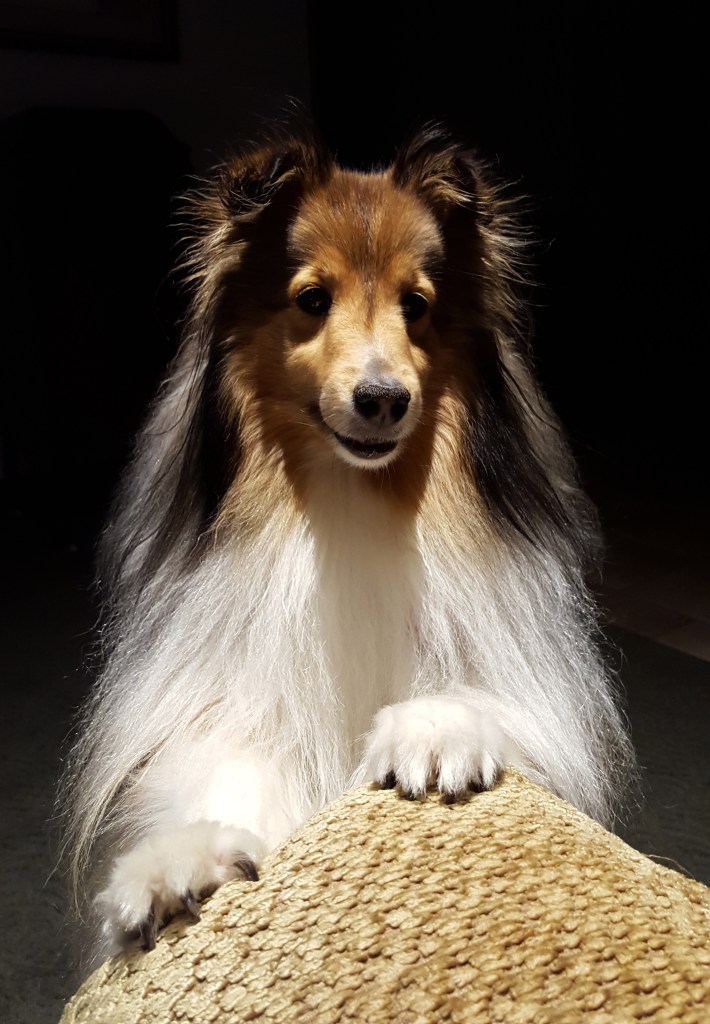
Yes, you read that right, it’s me! I’ve been wanting to visit, but mama said she needed a little time so I’ve been waiting. Impatiently. Just because I’m over the Rainbow Bridge doesn’t mean I’ve learned patience. Nope, I’m the same demanding princess I’ve always been, but I figured I’d cut mama and daddy a break, cause they’ve been through a lot.
I’m not totally self centered!
Sending my love to all of you!
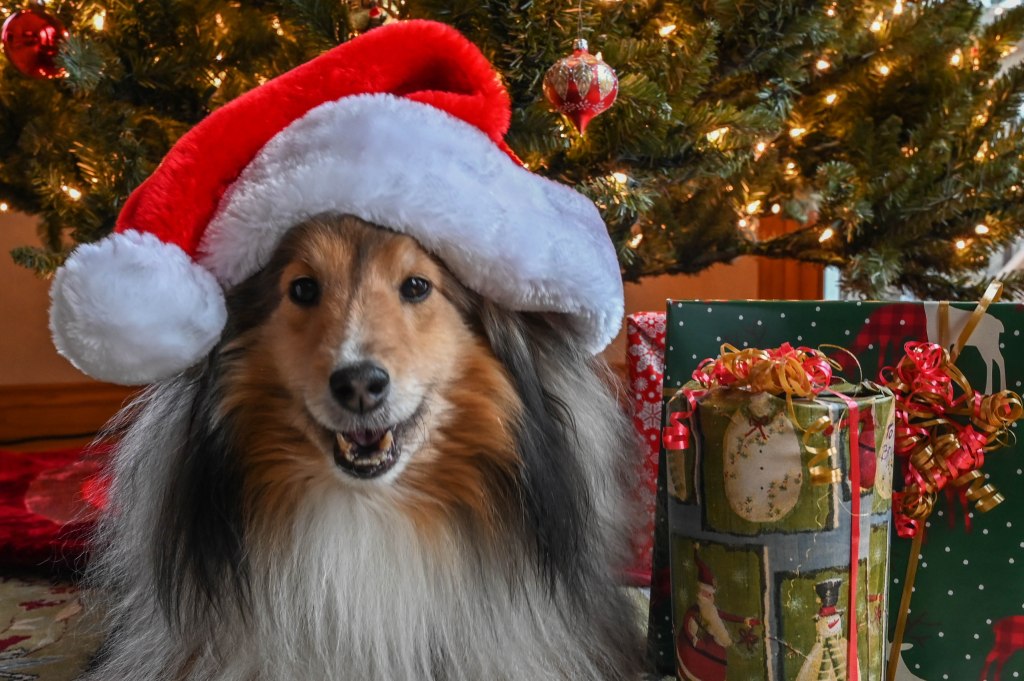
But today is my birthday, people! I’m sweet sixteen, and I figured what better time to check in with you than on my birthday! I was kind of hoping there’d be presents, but when you think about it, I don’t really need anything wrapped up pretty – – here on the other side of the bridge I get whatever I want, whenever I want it.
As befits a princess, don’t you know.
Do you happen to have a treat for me?
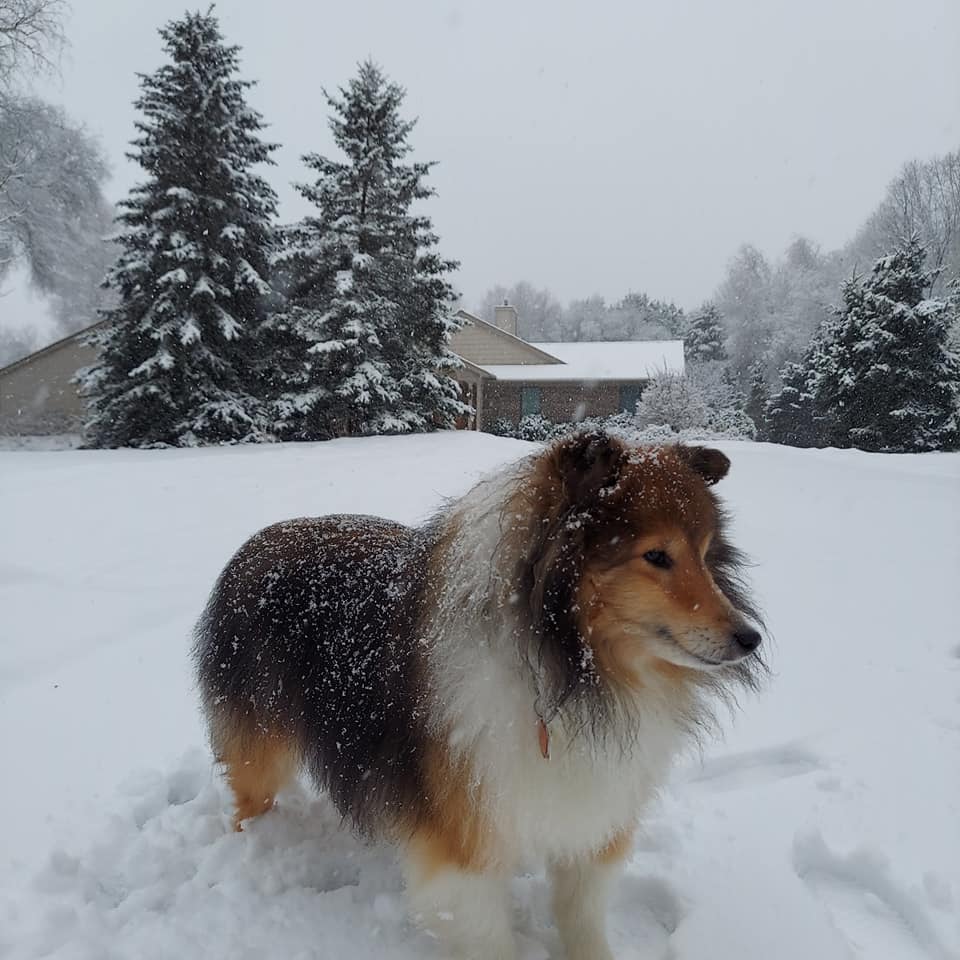
As you know, I’m across the bridgewith a lot of my doggie friends, and we’re having a real wonderful time exploring and napping and getting treats and stuff. It’s pretty crazy. If I feel like playing in the snow, it snows! And if I’d rather nap in a pool of sun, well, the sun shines and warms me to the perfect temperature. I’m never hot! I’m never cold! And I never, ever, have to wear those silly boots that mama and daddy used to put on my feet!
Not wearing those boots, nope, not doing it.
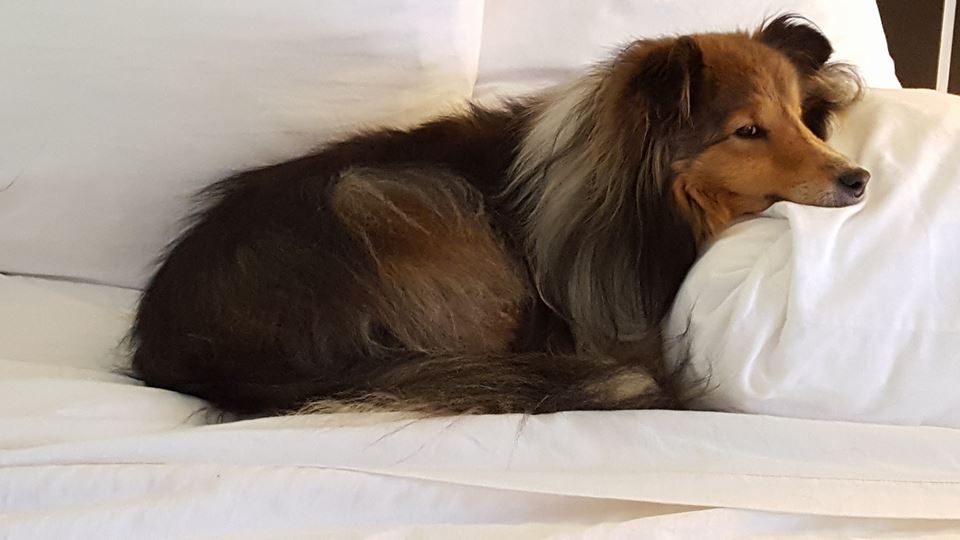
Oh, and I get to chase stuff over here! There’s squirrels and chipmunks and even cats! OK, I don’t get to actually catch any of them, it’s just a fun game after all, but I get to run as much as I want! And I never get tired! And if I do feel like a little snooze there’s big huge puffy sofas with piles of pillows for me to lounge on. You might remember that I was something of a pillow hog at my house, and up here I get as many pillows as I want!
My pillow, mama, back off.
Most important is that I feel great! No tummy aches, no achy hips or feet, no silly gall bladder to worry about. And I love eating again, it’s one of my favorite things to do. I never gain too much weight and there’s no yucky prescription food. Our suppers are yummy, succulent meals prepared specially for each of us. I told them I didn’t want any chicken and rice, I’m focused mostly on cheese and roast beef with an occasional side of cabbage, my favorite vegetable. Sometimes I pick a cherry tomato right off the vine, they’re always warmed by the sun, sweet and juicy, and always in season! It’s simply amazing.
It fact, it’s almost perfect. Perfect, of course, would be if all of you, and especially mama and daddy, were here with me. But I know it’s not time yet, so I’ll wait…somewhat impatiently… because, well, I’m me.
I’ll stop by for a visit again some day, but until we can be together again, I have some advice for you. Run through the snow, eat a cherry tomato and sleep with as any pillows you can get. I guarantee you’ll be smiling every day.
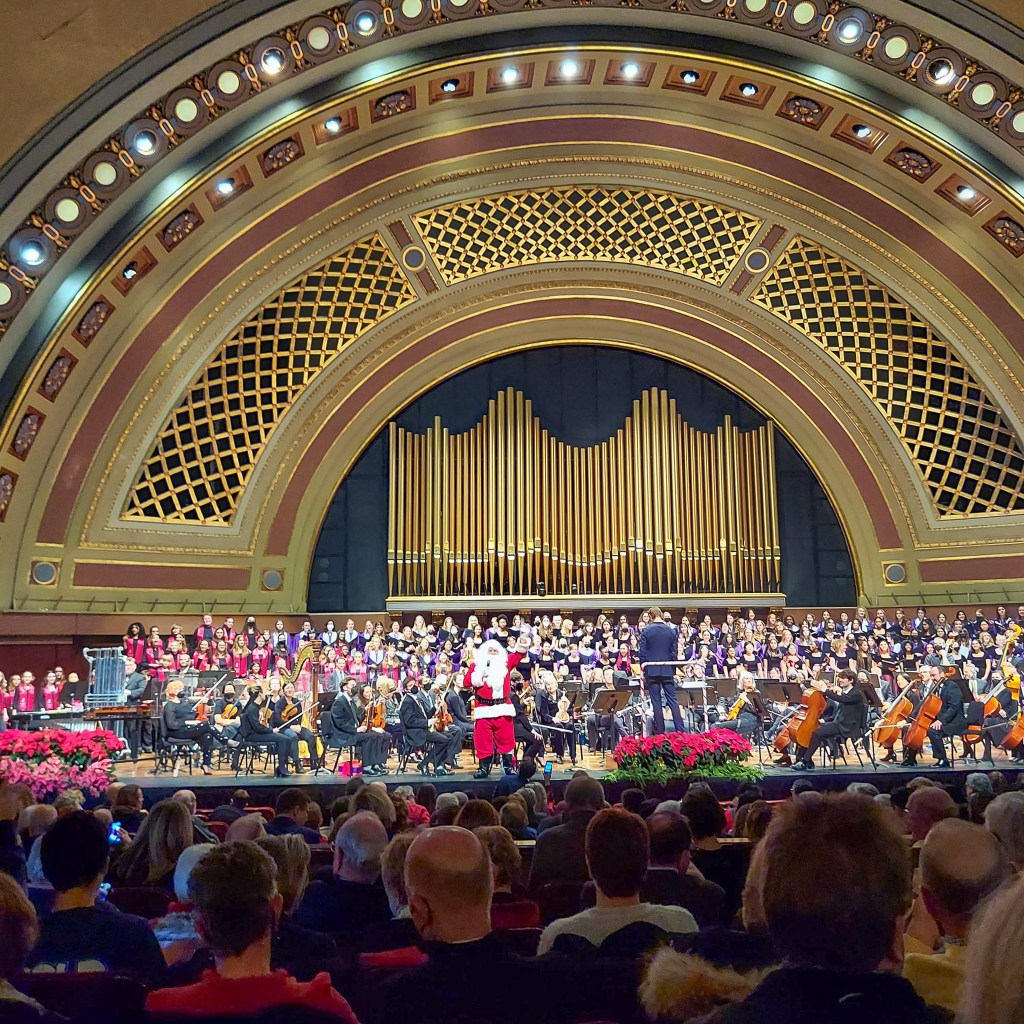
Friday night we attended the Ann Arbor Symphony’s Christmas Pops at Hill Auditorium where I’ve enjoyed many AA Symphony concerts with my aunt. Friday my husband sat on one side of me but there was an empty seat on the other side.
I was lucky enough to hear Sleighride and Christmas Festival again, pieces I play every year with my own community band. I have to say I think CCB’s whip instrument was more effective than the one used Friday night, but having strings really makes those pieces extra wonderful.
At one point Silent Night was filling the auditorium, voices and instruments singing softly, the sound rising up to hover near the ceiling and I thought about my aunt and how she would have loved this concert. I wished she could be there, I could imagine her, dressed in holiday red, grinning back at me as we silently acknowledged just how good it all was.
I got sort of misty-eyed.
Then I noticed some movement in the lights up near the stage. One of the big round lights near the ceiling was flickering faintly. And, as I watched, it blinked. Twice.
And I grinned.
Because I knew right then and there that my aunt had figured out a new way to grin back at me. Merry Christmas, Aunt Becky, I think you had the best seat in the house.
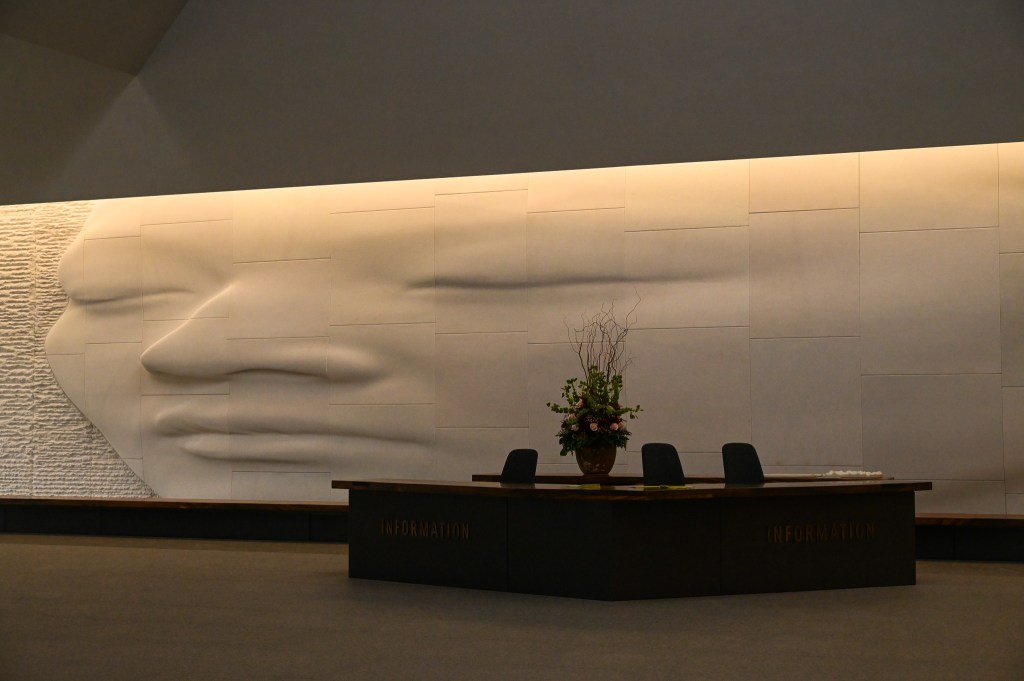
A friend and I got to visit the Meijer Sculpture Garden this week. The conservatory building was all decked out for Christmas, which is why we planned our visit.
There’s been lots of expansion to the building since I was there, notably a huge room with giant marble sculptures of faces on all four walls.
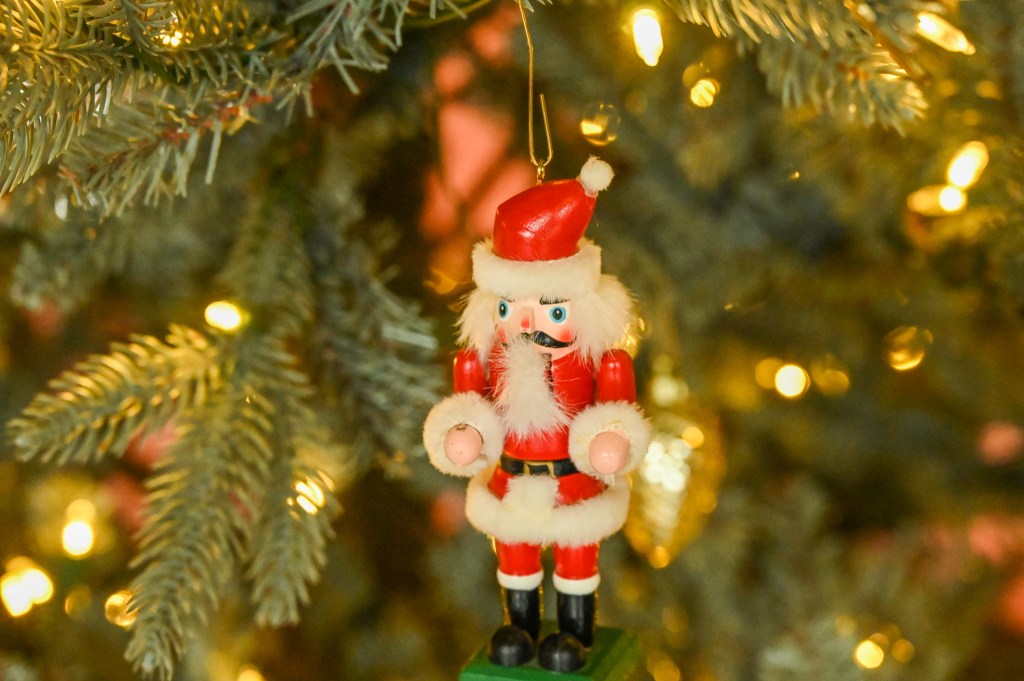
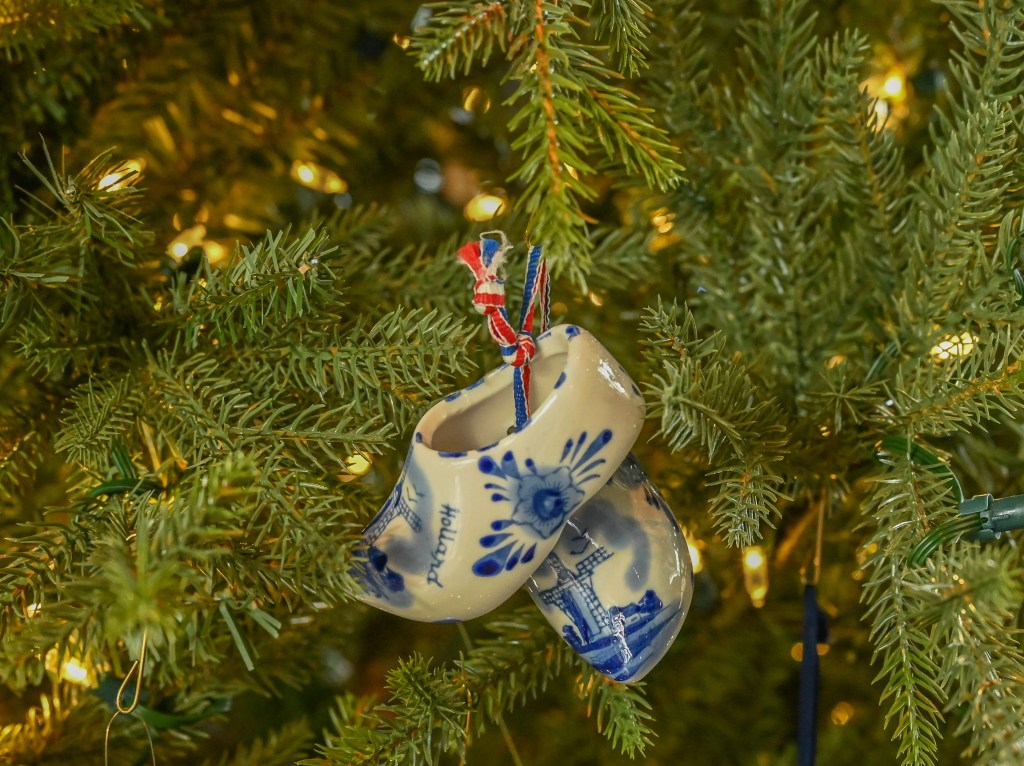
But the main attraction were the Christmas trees, each decorated as they might be countries from around the world.
They were all beautiful, and it was so much fun to stop and examine them.
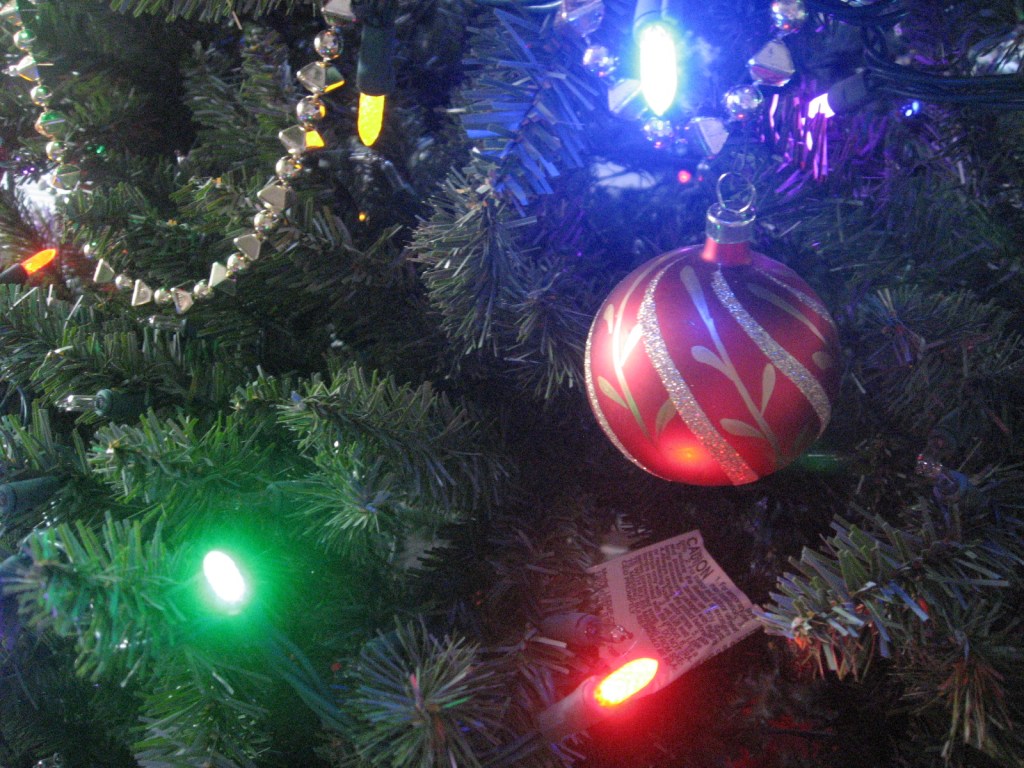
All those trees, lined up or tucked into corners sure got me into the holiday spirit!
And then we wandered in the desert room, filled with catus and seasonal poinsettias…
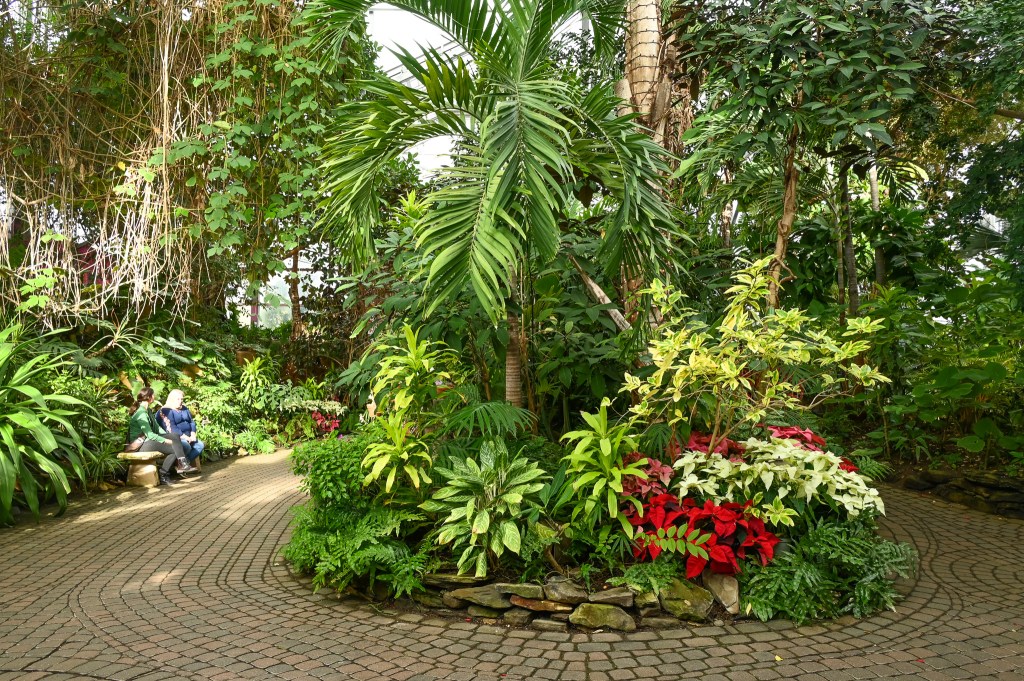
…and the tropical room filled with jungle plants and more poinsettias….
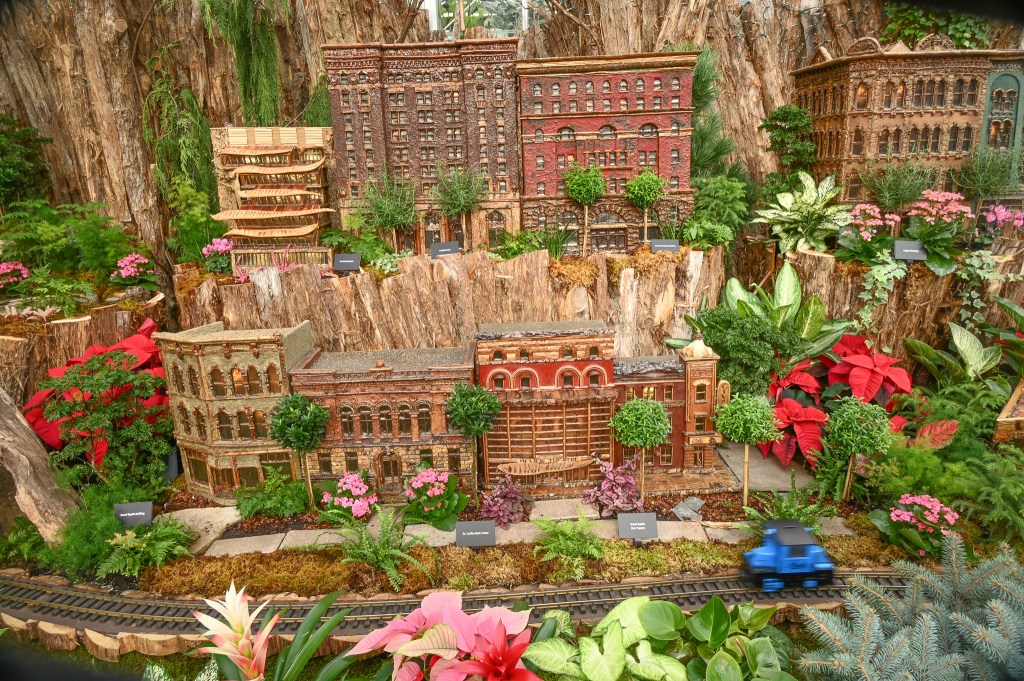
…and watched a model train wander through a village filled with iconic Grand Rapids buildings made out of natural materials…
…surrounded by more poinsettias.
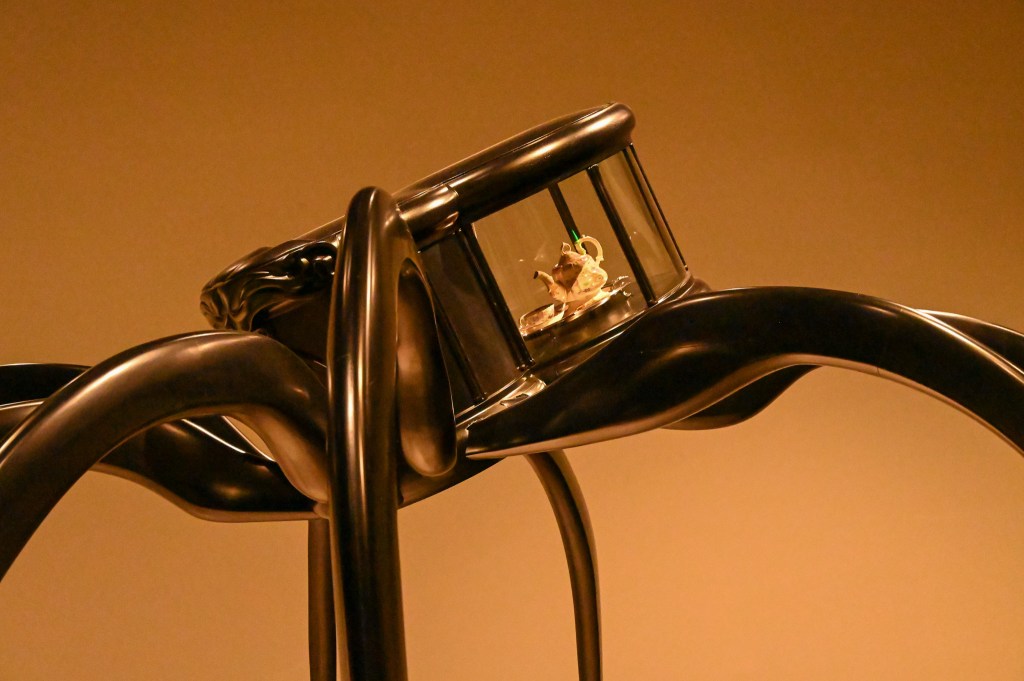
We even spent some time trying to figure out a couple of art installations.
Even after reading the notes on the wall we didn’t really get it. But it was fun trying.
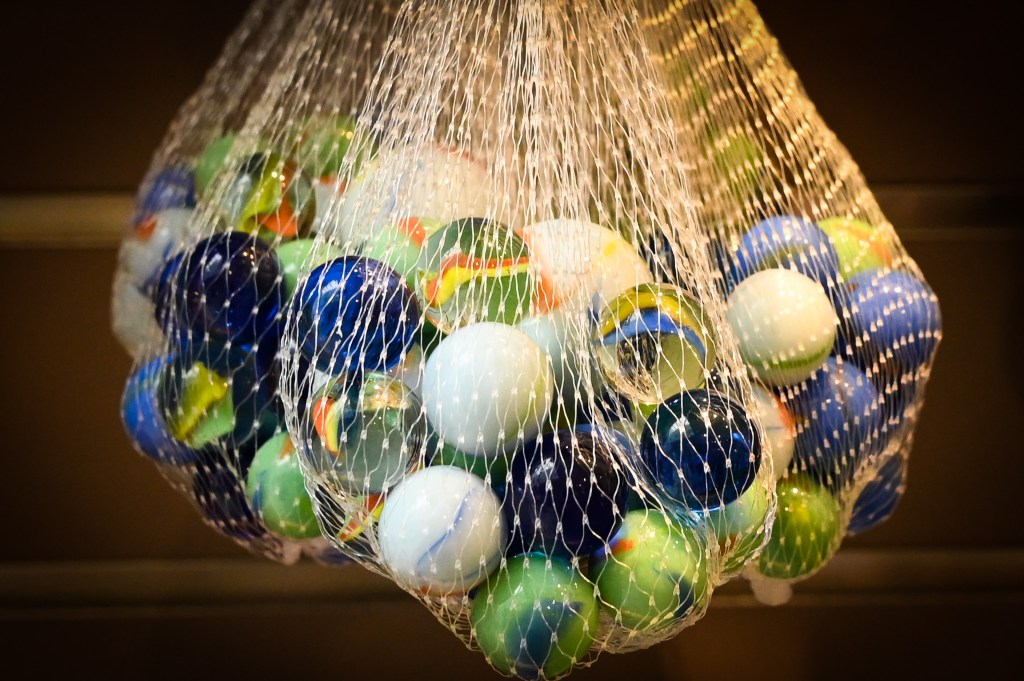
We stopped at the gift shop, where I stared at a bag of marbles for a long time, remembering all the games we used to play back a few decades when I was in grade school. I still like the way marbles feel, and almost bought this bag, just for fun.
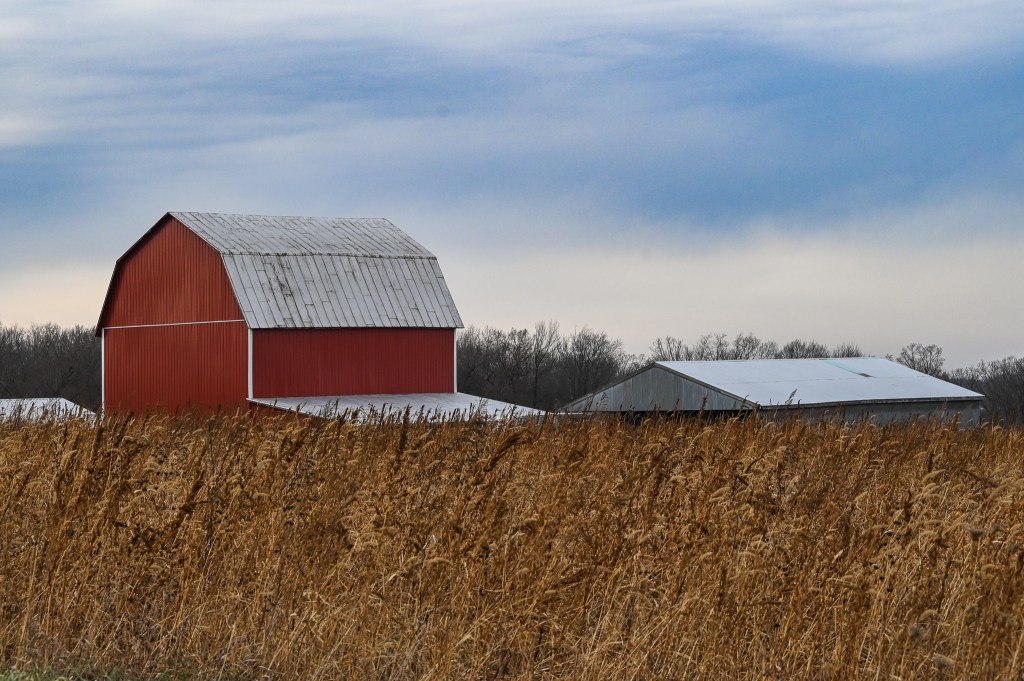
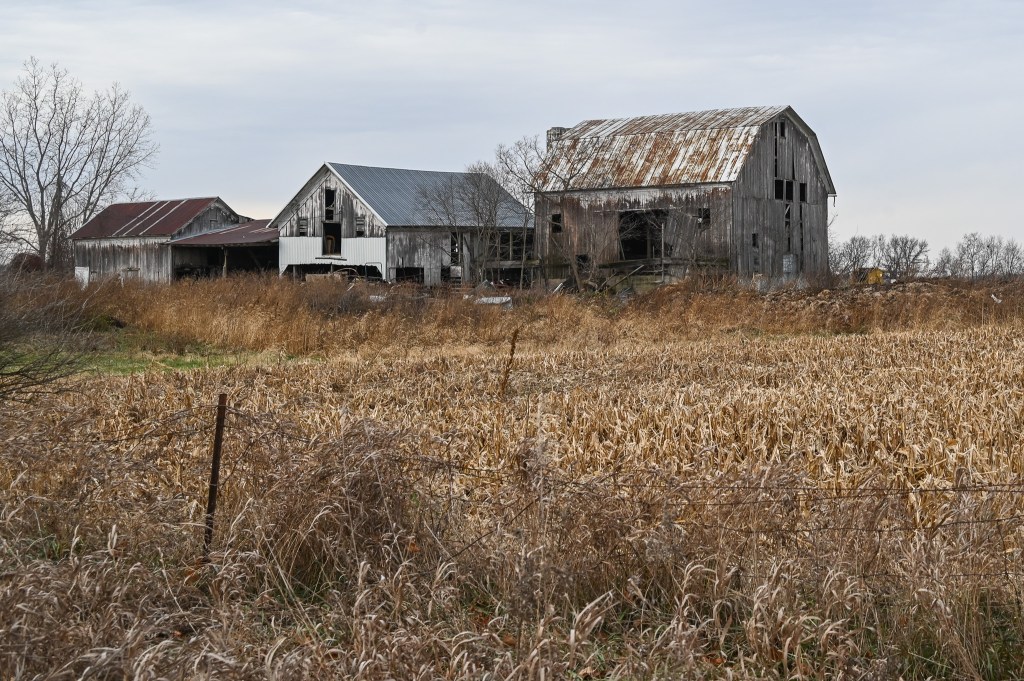
But I didn’t. We bought lunch instead and then headed home, taking the back roads the better to find some barns. Of course we found one…
.
..or two…
…or three.
So fun!
Thanks, Linda, for driving us around on our latest adventure. Let’s schedule the next one soon!






















 Change Is Hard